RussiansInUSA editorial team · Facts checked November 18, 2026 · Official site
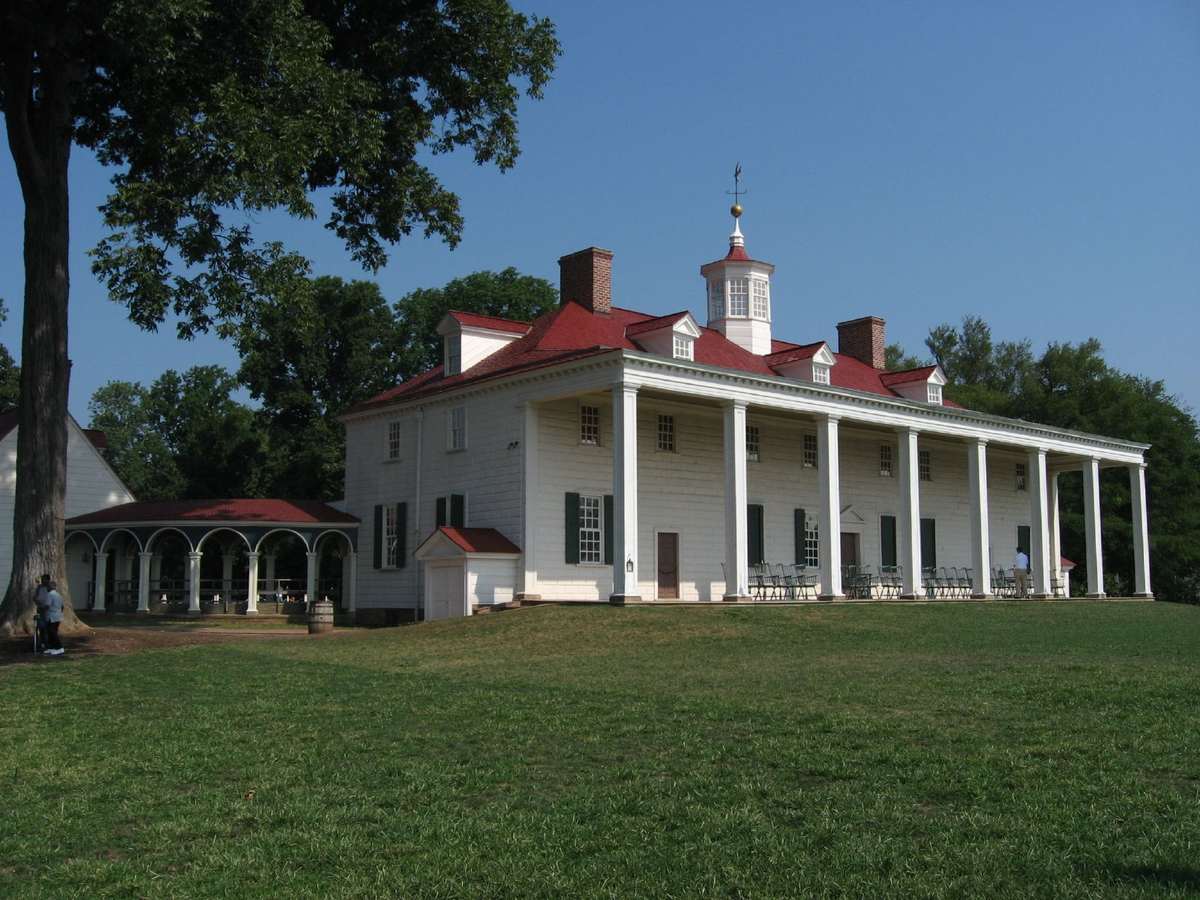
George Washington's Mount Vernon is the Potomac River estate of the first US president, at 3200 Mount Vernon Memorial Highway, Mount Vernon, VA 22121, about 15 miles south of Washington DC and 8 miles south of Alexandria. You can see Washington's Mansion, his tomb, gardens, a farm and a museum. It is open 365 days a year and easy to reach from DC by Metro and bus, by car, by bike or by boat.
History of Mount Vernon
The estate museum says the house began in 1734 as a one-and-a-half-story home built by George's father, Augustine Washington; tree-ring dating confirms the framing timber was cut that year. The name Mount Vernon came from George's half-brother, Lawrence Washington.
George Washington began living at Mount Vernon in 1754, when it was a 3,000-acre estate with a house of roughly 3,500 square feet. He married Martha Dandridge Custis in 1759 and inherited the property in 1761. Over 45 years he enlarged the house, with major expansions in 1758, 1774 and 1776, directing the work even when he was away. By his death the estate covered about 7,600 acres and the Mansion had 21 rooms and almost 11,000 square feet, ten times the average colonial Virginia home, according to the museum.
Mount Vernon was also a plantation. At least 577 enslaved people lived and worked here during Washington's lifetime; in 1799 there were 317, of whom Washington owned 123. His will ordered that his enslaved workers be freed after his wife's death, which covered fewer than half of the people held at Mount Vernon; the rest belonged to the Custis estate (153) or were rented from local landowners (41). Their manumission came in 1801.
Washington died in his bedchamber at Mount Vernon on December 14, 1799, and was placed in the old family vault four days later. In 1831 his remains, Martha Washington's and those of other family members were moved to the new brick tomb his will called for.
By the 1850s the house was in poor repair. Ann Pamela Cunningham founded the Mount Vernon Ladies' Association in 1853 and by 1858 had raised $200,000 to buy the Mansion and 200 acres from the last private owner, John Augustine Washington III. The estate opened to the public in 1860. The Association, a private nonprofit, still owns it and takes no government funding. About 500 acres are preserved today, and the estate says it averages one million guests a year.
What to see at Mount Vernon
The Mansion. Entry is by guided tour only, with a timed Mansion tour ticket. Tours last 15 to 25 minutes. Restored rooms include the New Room, the largest in the house, the Washingtons' Bedchamber where the president died, the Lafayette Room and the cupola.
Historic Area and outbuildings. More than a dozen outbuildings, among them the blacksmith shop, smokehouse, stable and spinning house, explored with a free audio tour.
Washington's Tomb. George and Martha Washington are buried here, and a brief wreath-laying ceremony that visitors can join takes place every day. Nearby are the Slave Memorial and the African American Burial Ground, where free and enslaved people who lived and died on the estate are buried.
Gardens, farm and forest trail. Four gardens, heritage-breed animals and a short woodland walk.
Museums. The Ford Orientation Center and the Donald W. Reynolds Museum and Education Center hold 25 theaters and galleries. The Lives Bound Together exhibit, on the enslaved community, is included with admission.
Distillery and Gristmill. Working reconstructions 2.7 miles from the main entrance, at 5513 Mount Vernon Memorial Hwy, Alexandria, VA 22309. They are seasonal: April through October, Friday to Sunday, 10 a.m. to 5 p.m. Included with a grounds pass, $10 without one.
How to get to Mount Vernon from Washington DC
Metro and bus. The estate's directions say to take the Yellow Line (wmata.com) to Huntington station, exit at the lower level (Huntington Avenue) and board Fairfax Connector bus 101, the Fort Hunt line, for a 20-minute ride to the entrance gate. Fairfax Connector says the route runs mainly along the George Washington Memorial Parkway and Fort Hunt Road, with a $2.25 fare; check its schedule page before you go.
By car. Parking is always free, first come, first served, in lots on both sides of the George Washington Memorial Parkway at the entrance. If an older GPS does not know the address, the estate suggests the post office across the road: 3500 Mt Vernon Memorial Hwy, Alexandria, VA 22309.
By boat or bike. Cruises from Washington DC and Old Town Alexandria give you three hours at the estate before the return trip; check the cruise schedule on the estate's directions page. Cyclists can ride the Mount Vernon Trail, with rentals in Old Town Alexandria and at Mount Vernon.
Mount Vernon hours and tickets
| What | As the site states |
|---|---|
| Estate | daily, 365 days a year, holidays included |
| Warm season (April to early November) | 9 a.m. to 5 p.m. |
| November through March | 9 a.m. to 4 p.m. |
| Museum and shops | one hour later than the estate |
| Grounds pass, ages 12+ | $30 |
| Grounds pass, ages 6 to 11 | $16 |
| Ages 0 to 5 | free |
| Mansion tour time | $2 per person online, free when reserved at the gate |
Hours and prices checked November 18, 2026 on mountvernon.org.
Admission runs from $16 to $30, and young children are free. Hours may vary for special events, so check today's hours and buy on the tickets page before you go. Children 15 and under must be with an adult.
Standing discounts: buying online 3 days ahead saves $2; uniformed military members and Purple Heart recipients (in person only) get in free; EBT card holders can buy up to 4 daytime tickets for $2 each at the gate; members get free daytime admission for a year.
Tips for your visit
- Allow at least three hours, the estate's own advice.
- Reserve a Mansion tour time online. On busy days, weekends included, the first open tour at the gate may be 2 hours or more after you arrive. Budget an hour for the tour and book other tours at least 75 minutes after it.
- Bags larger than 16x16x8 inches are not allowed; smaller ones are inspected.
- Bottled water is fine; other outside food and drinks are not. Food is sold at The General's Canteen and the Mount Vernon Inn Restaurant.
- Leashed dogs may go in outdoor areas, not inside the Mansion or other buildings.
- Photos are allowed in the Mansion, without flash, tripods or selfie sticks.
- The estate is open rain or shine, though severe weather can change or cancel programs.
More sights are on our Washington DC places page, and the Washington DC city guide covers the rest of the city.
Questions people ask
How long does a visit to Mount Vernon take?
Mount Vernon recommends at least three hours to see the main attractions: the Mansion, the Washingtons' tomb, the gardens and the museum. Budget one hour for the Mansion tour, including the wait. The Distillery and Gristmill, 2.7 miles from the entrance and open April through October on Fridays to Sundays, need extra time.
Can you go inside George Washington's house without a tour?
No. Entry to the Mansion at Mount Vernon is by guided tour only, with a timed ticket. You can reserve a time online for $2 per person or for free at the gate, but on busy days the first open gate time can be hours away. The tour itself lasts 15 to 25 minutes.
How do you get to Mount Vernon without a car?
Take the Metro Yellow Line to Huntington station, then Fairfax Connector bus 101 from the lower level to the estate's entrance gate, about a 20-minute ride. You can also take a cruise from Washington DC or Old Town Alexandria with three hours at the estate, or bike the Mount Vernon Trail.
Where is George Washington buried?
At Mount Vernon. Washington died there on December 14, 1799, and asked in his will to be buried at home. In 1831 his remains and Martha Washington's were moved to the new brick tomb on the estate, which visitors can see, and a brief wreath-laying ceremony is held there every day.
Places on the map
Sources
- George Washington's Mount Vernon
- Mount Vernon: Plan Your Visit (prices, FAQ, guest rules)
- Mount Vernon: Hours and Directions
- Mount Vernon: Admission Discounts
- Mount Vernon: The Mansion
- Mount Vernon: Tombs
- Mount Vernon: Distillery and Gristmill
- Mount Vernon: George Washington and Slavery
- About Mount Vernon
- The Mount Vernon Ladies' Association
- WMATA: Huntington station
- Fairfax Connector: Route 101
- Mount Vernon: Buy Tickets (grounds pass prices)
- Mount Vernon: Historic Area
- Mount Vernon: Slave Memorial and African American Burial Ground