RussiansInUSA editorial team · Facts checked November 5, 2026 · Official site
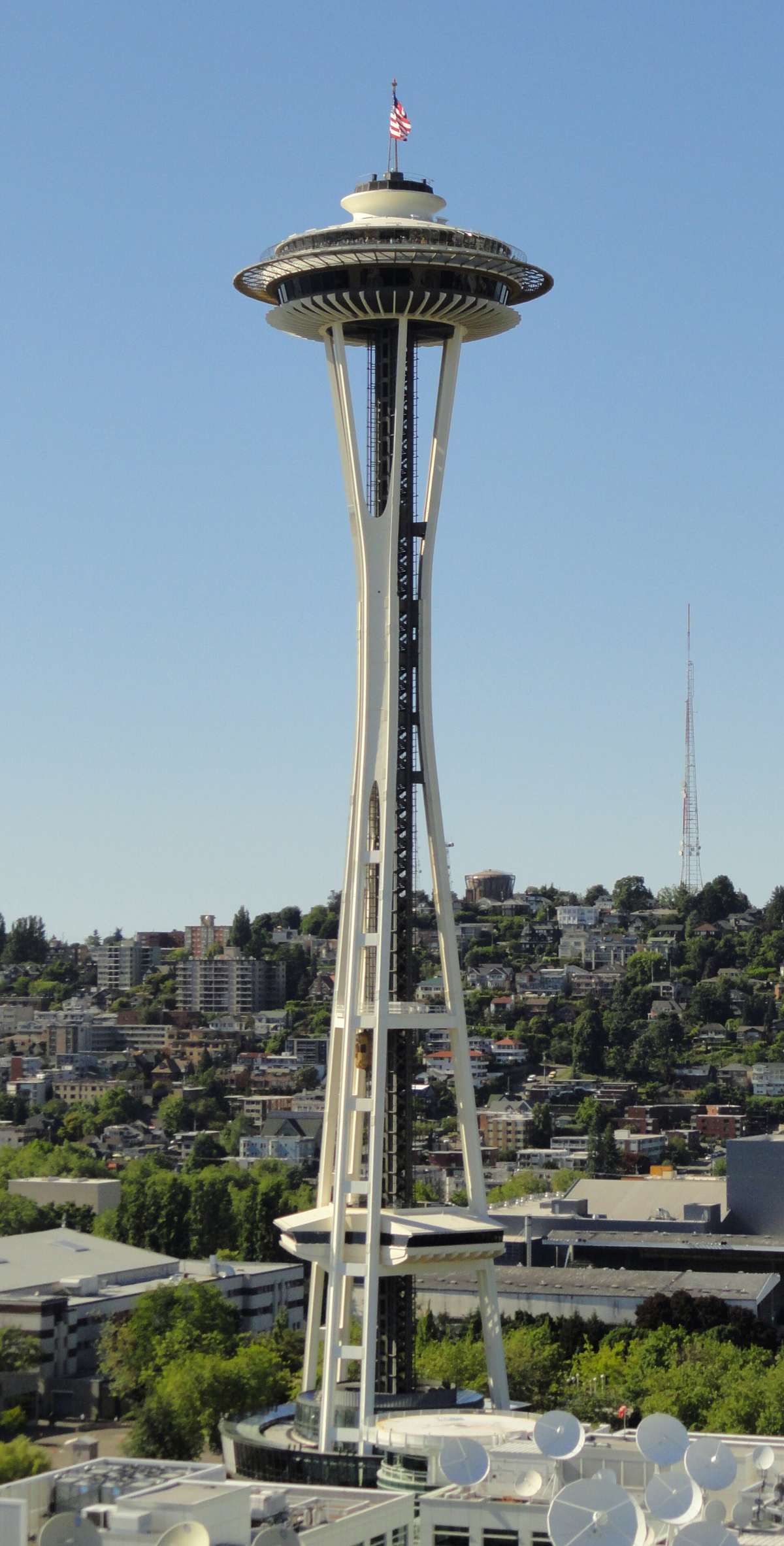
The Space Needle in Seattle is a 605-foot tower topped with a flying saucer. It stands on the Seattle Center campus north of downtown, at 400 Broad St. It was built for the 1962 World's Fair and has been the best-known landmark of Seattle ever since. People go up for the views from an open-air deck with glass walls and for The Loupe, a rotating glass floor that the Space Needle calls the world's first and only one.
Space Needle history: from a napkin sketch to the 1962 World's Fair
The idea came in 1959. Edward E. Carlson, a Seattle hotel executive and one of the chief organizers of the coming fair, saw a broadcast tower with a restaurant on top in Stuttgart, Germany, and sketched his own tower on a napkin. He also gave it the name "Space Needle."
Early concepts included a UFO, a tethered balloon and a cocktail shaker with a tram. Architect John Graham Jr. developed the flying saucer top house, and architect Victor Steinbrueck gave the tower its tapered "wasp-waisted" shape. The final design came together about a year and a half before the fair.
Investors bought a 120-by-120-foot lot, once the site of a fire station, for $75,000 in 1961, 13 months before the fair. Howard S. Wright Construction Company built it. The foundation pour took 467 cement trucks in a single day, which the Space Needle says was the largest continuous concrete pour in the West at the time. The foundation is so heavy that the tower's center of gravity sits five feet above the ground. Chief engineer John Minasian had designed rocket gantries for NASA. The basic tower was finished in December 1961, eight months after work began, and the whole project cost about $4.5 million.
The Century 21 Exposition, the 1962 Seattle World's Fair, was opened by President John Kennedy on April 21, 1962 and closed on October 21. The tower opened on the first day and hosted an estimated 2.65 million visitors during the fair. Its original mast was a natural gas torch lit in rainbow colors at night. The Space Needle and the Monorail both remain from the fair on today's 74-acre Seattle Center campus.
Later changes:
- 1982: the SkyLine level, an event space 100 feet up, was added.
- 1999: on April 21, the city's Landmarks Preservation Board named the tower an official City of Seattle Landmark.
- 2000: a $20 million revitalization added the Pavilion Level, the SkyCity restaurant and other upgrades.
- 2017-2018: the Century Project, begun in September 2017 and revealed in late summer 2018, exposed the internal structure and added glass observation levels, the Oculus Stairs and The Loupe.
What to see at the Space Needle
On the way up you pass the "Building the Marvel" exhibit on the tower's history. The elevator takes about 41 seconds to carry you 520 feet up to the saucer.
Upper Observation Level. An outdoor deck with open-air glass walls and floor-to-ceiling views. Skyriser glass benches stand on the deck. The Sunset Bar and the TipTop Cafe, with pies and soft serve, are on this level too.
The Loupe. The Oculus Stairs lead down to a rotating glass floor that shows the tower's own structure and the area below. The Revolving Bar on this level serves cocktails, local beer and wine. From fall to spring the Loupe Lounge is open here for guests 21 and over.
Your ticket lets you stay on both levels until closing that day.
Chihuly Garden and Glass is next door at Seattle Center and has its own page in our Seattle places section; the combination ticket is listed below.
How to get to the Space Needle
The easiest way from downtown is the Seattle Center Monorail, another survivor of the 1962 fair. It runs between Westlake Center and Seattle Center, about every 10 minutes according to Seattle Center, and the ride takes about two minutes. The Space Needle entrance is on the north side, across from the monorail station.
One-way monorail fares, per seattlemonorail.com: adults (19-64) $4, youth (6-18) $2, reduced fare $2 (seniors 65 and over, people with disabilities, Medicare cardholders, U.S. military with ID, ORCA LIFT cardholders), children under 5 free. Ticket machines take cards and contactless payment only. Youth with a youth ORCA card ride free. The monorail runs Monday to Thursday 7:30am to 9pm, Friday 7:30am to 11pm, Saturday 8:30am to 11pm and Sunday 8:30am to 9pm. Fares checked November 5, 2026 on seattlemonorail.com.
Westlake light rail station, at 4th Ave and Pine St, connects to the monorail. Sound Transit lists the 1 Line and 2 Line there. The Space Needle says the monorail together with Sound Transit buses and light rail links it to the airport.
King County Metro buses to Seattle Center, per the Center: routes 1, 2, 4, 8, 13, 24, 29, 31, 33 and the RapidRide D Line, with the RapidRide E Line and routes 5 and 28 along Aurora Ave N.
Parking at the tower is limited, and the Space Needle recommends Seattle Center's nearby parking (the Center has two garages). Valet costs $25 an hour.
Space Needle hours and tickets
The tower is open year-round, but hours vary by season, and the Space Needle asks visitors to check for changes and closures before they go.
| Day | Hours (Pacific Time) |
|---|---|
| Monday - Thursday | 11:00am - 7:00pm |
| Friday | 10:30am - 7:30pm |
| Saturday | 9:30am - 8:30pm |
| Sunday | 9:30am - 7:30pm |
| Ticket | Price |
|---|---|
| General Admission | $35 to $55 |
| Chihuly Garden & Glass + IMAX Combo | $74 |
| Fast Pass Combo | $129 |
| CityPASS | $119 to $139 |
General admission prices vary by season and time of day. Youth (5-12) and seniors (65 and over) get discounts. Military, King County resident and tribal rates are sold only at the admissions office with ID. With a combo ticket you can visit Chihuly Garden and Glass any time on the same day.
Hours and prices checked November 5, 2026 on spaceneedle.com.
Tips before you go
Tickets are timed: arrival windows every 15 minutes, with 5-minute slots inside them. If you are more than 5 minutes early or late, see an attendant. Without a ticket bought ahead, same-day entry depends on availability. Allow about 30 minutes from the entrance to the top for security, the exhibit and the elevator.
Every guest and bag is screened, and weapons are not allowed. Small backpacks and purses that fit under an airline seat can come in. Medium bags and large backpacks go in the free lockers near the main entrance. Bags too big to carry onto a plane are not allowed and will not fit in the lockers. Strollers stay in your car or the stroller area; car seats are fine. Pets are not allowed, service animals are. Wheelchairs are always welcome, lifts serve the observation deck and The Loupe, and groups are directed to the courtesy entrance on the ground floor in the gift shop. Questions go to (206) 905-2100.
Questions people ask
How tall is the Space Needle?
The Space Needle is 605 feet tall. Its saucer-shaped top house sits at 520 feet, and the elevator gets there in about 41 seconds. The tower was built for the 1962 Seattle World's Fair and opened on April 21, 1962, the fair's first day.
What is The Loupe at the Space Needle?
The Loupe is a rotating glass floor one level below the upper observation deck, added in the 2017-2018 Century Project renovation. The Space Needle calls it the world's first and only rotating glass floor. It shows the tower's structure and the city below, and the Revolving Bar is on that level.
How much are Space Needle tickets?
General admission costs $35 to $55 depending on season and time of day, with discounts for youth 5 to 12 and seniors 65 and over. The Chihuly Garden & Glass + IMAX Combo is $74. Prices were checked on November 5, 2026 on spaceneedle.com.
Can I bring a backpack to the Space Needle?
Small backpacks and purses that fit under an airline seat are allowed. Medium bags and large backpacks go in the free lockers near the main entrance. Bags too big to carry onto a plane are not allowed, and all bags are screened at the entrance.
Places on the map
Sources
- Space Needle (official site)
- Space Needle: History
- Space Needle: About
- Space Needle: Plan Your Visit
- Space Needle: FAQ
- Space Needle: Bag Policy
- Seattle Center: History
- Seattle Center: Getting Here
- Seattle Center Monorail: Ride with Us
- Sound Transit: Westlake Station
- Seattle Center Monorail
- Space Needle: Accessibility