RussiansInUSA editorial team · Facts checked November 11, 2026 · Official site
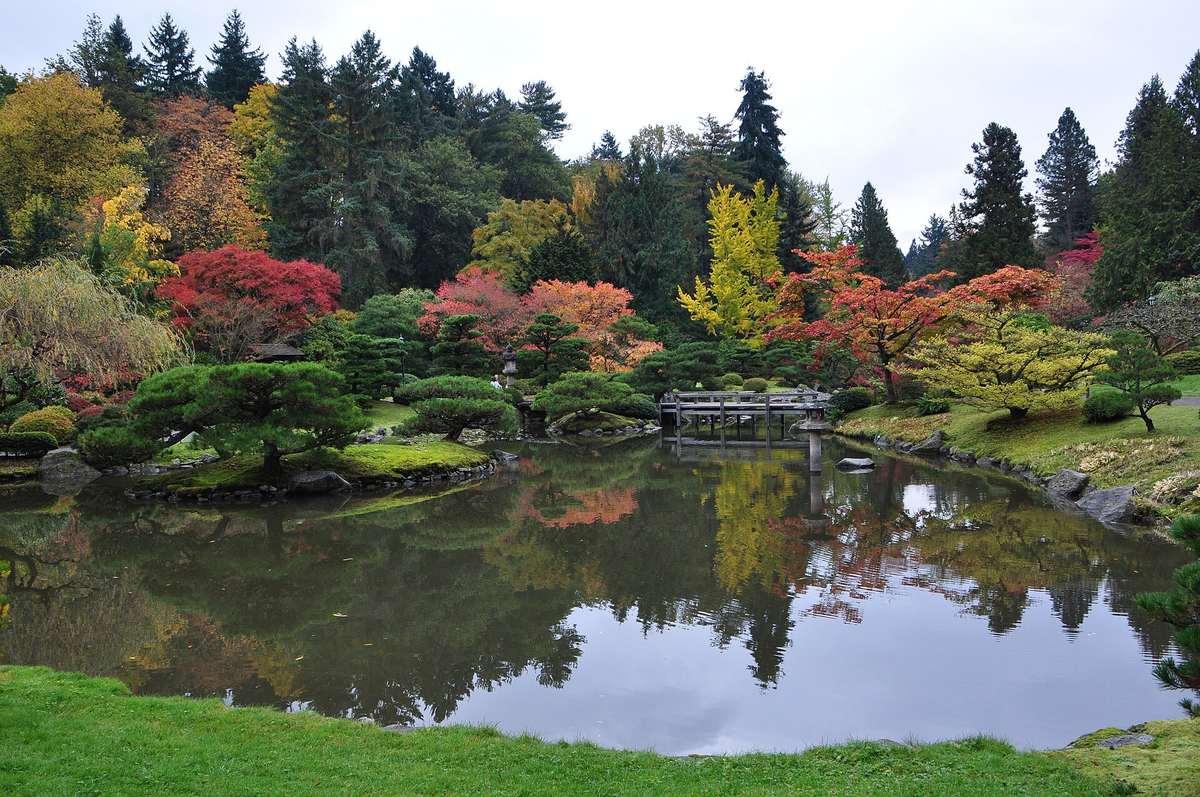
The Seattle Japanese Garden is a 3.5-acre garden inside the Washington Park Arboretum, at 1075 Lake Washington Blvd E. The Japanese garden designer Juki Iida planned it, and it opened to the public in June 1960. It is a stroll garden: a winding path leads around a pond with koi, past rocks, stone lanterns, bridges and a tea house. The garden is open March through November, adult admission is $10, and it closes for the winter.
History of the Seattle Japanese Garden
The garden tells its own story this way. Regional interest in Japanese gardens began in 1909, when Seattle held what the garden calls the Alaska Yukon Exhibition, and a Japanese pavilion with a garden was built for the fair. In 1924 the Olmsted Brothers designed the University of Washington Arboretum, and by 1937 officials agreed the arboretum needed a Japanese garden.
The plan had to wait until after World War II, when, in the garden's words, racial and political tensions eased. Only in 1957 did the Arboretum Foundation start raising money. Tatsuo Moriwaki of Tokyo Metro Parks helped guide the work, and he chose Kiyoshi Inoshita and Juki Iida as designers.
The design was finished in 1959. Construction began in March 1960 under Iida and Nobumasa Kitamura. It had been planned to take three years and was done in four months, so the design changed along the way. Most of the work was done by local Japanese-American gardeners. Iida went to Snoqualmie Pass himself and picked 580 large granite rocks to set near the waterfall. The garden calls itself the earliest postwar public Japanese-style garden on the Pacific Coast.
Today the garden describes itself as one of four specialty gardens in the Seattle Parks and Recreation system of more than 400 parks. It runs under a cooperative agreement between the parks department and Seattle Botanic Gardens, the nonprofit formerly called the Arboretum Foundation, which since January 2016 has handled programs, outreach and fundraising. The garden says it draws over 100,000 visitors a year.
The garden is replacing its old stone wall at the north end of the pond with an ishigaki, a Japanese stone wall laid without binding material, and adding an accessible looped walkway there. The wall is built by Suminori Awata, one of the last stonemasons of a 15-generation lineage. Parts of the garden may be closed during the work; the garden posts updates on its site.
What to see in the garden
Iida followed the principle of shizensa, "the essence of nature." The path around the central pond shows Japan's scenery in miniature: mountains, forest, a waterfall, a river, islands and the sea. Views are hidden and then revealed around each bend, so the garden rewards a slow walk.
- The pond. Koi and turtles live here. Visitors may not feed the fish, turtles or other wildlife. Special koi food is sometimes sold at the gatehouse; ask the cashier.
- The waterfall rocks. The granite Iida chose in the mountains sits near the waterfall.
- The plants. Traditional Japanese species grow beside Pacific Northwest natives, so colors change with the season. In October there are separate maple tours.
- Shoseian tea house. It sits in a traditional roji garden and hosts the tea ceremonies.
The 40-minute tea ceremony runs April through October. Tickets are $15, reservations are required, and garden admission is separate. Tickets for a month go on sale at the start of the month before. Guests sit on tatami mats, with a bench for those who cannot. The garden asks guests to wear socks or tights (no bare feet) and skip jeans, rings and fragrance. Three local groups host: Chado Urasenke Tankokai, Omotesenke-ryu and the men's group Chaboshu.
How to get to the Japanese Garden
- Bus. King County Metro route 11 stops nearby on Madison Street. The garden suggests using the Metro Trip Planner.
- Light rail. The nearest Sound Transit station, University of Washington, is a 25-minute walk.
- Car. Parking is free but limited and often full on weekends.
Paths are mostly level gravel or paved, but a few sections are not accessible by wheelchair.
Hours and tickets
The garden is open Tuesday through Sunday and closed on Mondays. Hours change by season:
| Month | Tuesday to Sunday |
|---|---|
| March | 10 a.m. to 5 p.m. |
| April | 10 a.m. to 6 p.m. |
| May to August | 10 a.m. to 7 p.m. |
| September | 10 a.m. to 6 p.m. |
| October | 10 a.m. to 5 p.m. |
| November | 10 a.m. to 4 p.m. |
| December to February | closed for winter maintenance |
Last entry is 45 minutes before closing. On some days, usually the first Thursday of the month, the garden opens at noon; the site lists this year's dates.
| Ticket | Price |
|---|---|
| Adults 18-64 | $10 |
| Youth 6-17, seniors 65+, students with ID, adaptive, military | $6 |
| Children 0-5 | free |
| Adaptive assistant | free |
| Individual adult annual pass | $35 |
| Student, senior, adaptive or military annual pass | $30 |
| Family or dual annual pass | $65 |
| Photographer's annual pass | $90 |
Tickets are sold at the ticket booth. Hours and prices checked November 11, 2026 on seattlejapanesegarden.org. The garden notes that hours may change, so check its Location & Hours page before you go.
Tips before you visit
- Tours. From April through October the garden offers free guided tours, usually at 11 a.m., limited to the first 10 visitors. The schedule depends on volunteers and is posted on the garden tours page.
- Not allowed. Food and drinks other than water, picnics, pets (even in a bag), drones and tripods. Service animals are allowed.
- Photos. Informal photos of your visit are fine, without tripods or specialized equipment. Formal shoots, including wedding, family and portrait sessions, are not allowed. The garden suggests weekday mornings for photographers.
- On the path. Stay on the paths, keep off the moss, pick nothing and do not run.
For a longer walk, the 238-acre arboretum surrounds the garden. For more on the city, see our Seattle city guide, and for other sights, places to see in Seattle.
Questions people ask
When is the Seattle Japanese Garden closed?
The garden closes every winter, December through February, for seasonal maintenance. From March through November it is open Tuesday through Sunday and closed on Mondays. Hours change by month, from 10 a.m. to 7 p.m. in May through August to 10 a.m. to 4 p.m. in November. Last entry is 45 minutes before closing.
How much does the Seattle Japanese Garden cost?
Adult admission for ages 18 to 64 is $10. Youth 6 to 17, seniors 65 and over, students, military and adaptive visitors pay $6. Children up to 5 and adaptive assistants get in free. Tickets are sold at the ticket booth at 1075 Lake Washington Blvd E.
Can I attend a tea ceremony at the garden?
Yes. The Shoseian tea house hosts 40-minute tea ceremonies from April through October. Tickets are $15, reservations are required, and garden admission is not included. Tickets for each month go on sale at the start of the previous month. Guests are asked to wear socks or tights and avoid jeans, rings and fragrance.
Can I bring my dog or a picnic?
No. Pets are not allowed in the Seattle Japanese Garden, even in a bag or carrier, and only service animals may enter. Food and drinks other than water are not permitted, and picnics are banned. Drones, tripods and professional photo shoots are also prohibited.
Places on the map
Sources
- Seattle Japanese Garden: home page (address, 3.5 acres, seasonal guided tours)
- Seattle Japanese Garden: Location & Hours (seasonal hours, noon-start days, admission, annual passes, parking, bus 11, light rail, rules)
- Seattle Japanese Garden: About Us (history 1909-1960, Juki Iida, 580 rocks, management, 100,000 visitors)
- Seattle Japanese Garden: Visiting the Garden (rules, accessibility, koi and turtles)
- Seattle Japanese Garden: Tea Ceremony (Shoseian, $15, April-October, presenting groups)
- Seattle Japanese Garden: Garden Tours (free tours April-October, maple tours in October)
- Seattle Japanese Garden: Ishigaki Wall & Accessible Pathway (Suminori Awata, accessible walkway, 238-acre arboretum)
- Seattle Parks and Recreation: Japanese Garden (3.5 acres, Juki Iida, 1960, closes each winter)
- King County Metro: Route 11 (Madison Park, Capitol Hill, Downtown Seattle, via E Madison St)