RussiansInUSA editorial team · Facts checked November 11, 2026 · Official site
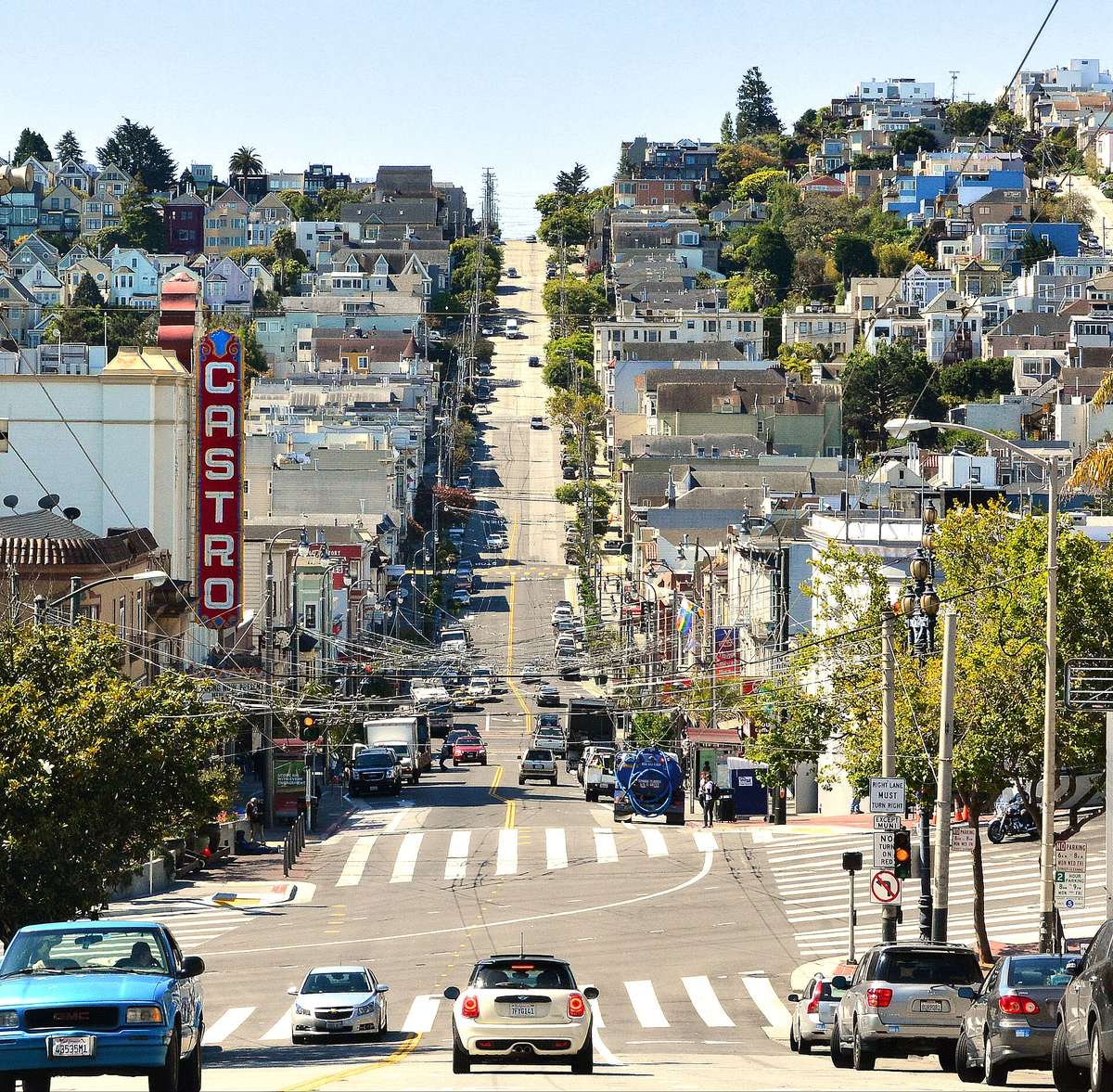
The Castro is the San Francisco neighborhood around Castro and Market streets, on the site of the old Eureka Valley. Since the 1970s it has been one of the best-known LGBTQ neighborhoods in the world: Harvey Milk worked here, and it holds the 1922 Castro Theatre and the GLBT Historical Society Museum. Walking the streets is free, and Muni Metro or the vintage F streetcar gets you here from downtown.
History of the Castro, from Eureka Valley to Harvey Milk
The Castro Community Benefit District (castrocbd.org) publishes a detailed history of the area. In 1846, it says, this land was part of a 4,443-acre grant to José de Jesús Noe. In 1854 John Horner bought most of the ranch for $70,000 and subdivided it. Real building began in 1889, when the Market Street cable car line reached Castro Street.
In the early 1900s Swedish, Norwegian and Finnish immigrants settled the valley, which earned it the nickname "Little Scandinavia." The 1906 earthquake and fire destroyed much of the city but stopped at Dolores and 20th streets, just below the valley. The Castro Theatre went up in 1922. From the 1930s to the 1960s Eureka Valley was a working-class Irish-American neighborhood.
Change came mid-century. In 1955 two valley residents, Del Martin and Phyllis Lyon, founded the Daughters of Bilitis. In the late 1960s gay men began moving in, drawn by cheap Victorian housing. In 1972 Harvey Milk opened Castro Camera at 575 Castro Street, and from 1973 he ran for office. It took four tries: in 1977 Milk became the first openly gay elected official of any large US city. In 1978 he and Mayor George Moscone were assassinated. In 1979 the light sentence given to their killer set off the White Night riot in the Castro.
The AIDS epidemic hit the neighborhood hard in the 1980s. According to the Castro CBD, the first AIDS Candlelight March started in the Castro in May 1983, and in 1987 activists began sewing the AIDS Memorial Quilt on Market Street. By 1995 more than 16,000 people had died of the disease in San Francisco. In 2004 San Francisco became the first US city to issue marriage licenses to same-sex couples, and Martin and Lyon were among the first couples married.
Today the Castro is a residential and shopping district. The San Francisco Planning Department (sfplanning.org) cites the Castro Camera building at 575 Castro Street as an example of tangible LGBTQ heritage in its citywide cultural heritage strategy, published in August 2020.
What to see in the Castro
The main sights sit within a few blocks and take a couple of hours on foot. Addresses below follow the Castro CBD list.
| Place | Address | What it is |
|---|---|---|
| Harvey Milk Plaza | Castro and Market | plaza honoring Milk, 20 by 30 foot rainbow flag on a 70-foot pole |
| Jane Warner Plaza | Castro, 17th and Market | small plaza by the F line terminus |
| Castro Theatre | 429 Castro Street | 1920s movie palace with a Wurlitzer organ |
| Former Castro Camera | 575 Castro Street | Harvey Milk mural and a memorial plaque in the sidewalk |
| Pink Triangle Park | Castro, Market and 17th | memorial to LGBT people persecuted in Nazi camps |
| Twin Peaks Tavern | 401 Castro Street | bar that uncovered its big windows in 1973 |
| GLBT Historical Society Museum | 4127 18th Street | history museum, open since 2011 |
The Castro CBD describes Pink Triangle Park as the first permanent free-standing US memorial to the estimated 15,000 gay men and women sent to Nazi camps. It has 15 granite pylons and two plaques.
The GLBT Historical Society, founded in 1985, opened its museum in January 2011. The main gallery holds the long-term exhibition "Queer Past Becomes Present"; the front gallery hosts changing shows.
The Castro Theatre was built in 1922, with an interior by architect Timothy Pflueger. Since 2022 Another Planet Entertainment has run it under a partnership that included a major renovation. It now hosts films, concerts and comedy.
Bronze plaques of the Rainbow Honor Walk line the sidewalks. The volunteer group behind it lists 46 installed and 28 more planned, honoring LGBTQ figures in the arts, literature, politics and activism.
How to get to the Castro
Castro Station sits at Castro and Market. According to SFMTA, the K Ingleside, L Taraval and M Ocean View Metro lines serve it, plus the late-night L Owl.
The vintage F Market & Wharves streetcar runs from Fisherman's Wharf (Jones St & Beach St) along Market Street and ends at 17th St and Castro St. SFMTA lists service daily from 7 a.m. to midnight. It is slower than the Metro, but the ride is a sight in itself.
Buses 24 Divisadero, 35 Eureka and 37 Corbett also serve the area. Parking is limited, and the Castro Theatre asks visitors to come by transit. If you drive, look for street meters or SFMTA lots.
Hours and tickets
The neighborhood itself is open around the clock and free. You only need tickets for the museum and for shows at the Castro Theatre.
| What | Hours | Price |
|---|---|---|
| GLBT Historical Society Museum | Tuesday to Sunday, 11 a.m. to 1 p.m. and 1:30 to 5 p.m.; closed Monday | $10, discounted $6 |
| Museum, children 12 and under | same | free |
| Museum, first Wednesday of the month | same | free, no reservations, first come first served |
| Castro Theatre box office | 30 minutes before doors on show nights | depends on the event |
Hours and prices checked on November 11, 2026 on glbthistory.org and thecastro.com.
The $6 museum ticket covers youth 13 to 17, seniors 65 and over, students and teachers with ID, active-duty military and people with disabilities. SNAP EBT and Medi-Cal cardholders get in free with three guests. The museum's site footer lists different hours from its visitor page, and the museum closes at times for exhibit changes and holidays, so check before you go.
The Castro Theatre is cashless and does not take checks. Tickets are sold in advance on thecastro.com and apeconcerts.com. The theatre warns that it cannot validate tickets bought on third-party sites.
Tips for your visit
Start at Harvey Milk Plaza at Castro and Market, where the flag stands across from Pink Triangle Park. Walk south on Castro Street past the theatre (number 429) to Milk's former shop (number 575), then turn onto 18th Street for the museum (number 4127).
On free first Wednesdays you cannot book online; entry depends on capacity. The standard audioguide to the main exhibit runs about 35 minutes and costs $1.99 in the CloudGuide app; it is free for blind and low-vision visitors.
Mission Dolores, the Castro CBD notes, sits just below the Castro. See the San Francisco city guide and the full list of places to see in San Francisco.
Questions people ask
Why is the Castro known as an LGBTQ neighborhood?
From the late 1960s gay men moved into the former Eureka Valley, drawn by cheap Victorian houses. In the 1970s Harvey Milk ran his camera shop here, and in 1977 he became the first openly gay elected official of any large US city. The Castro has remained a center of LGBTQ life in San Francisco since.
How much is the GLBT history museum in San Francisco?
General admission to the GLBT Historical Society Museum at 4127 18th Street is $10, and the discounted ticket is $6. Children 12 and under are free. On the first Wednesday of every month entry is free for everyone, first come first served, with no online booking. The museum is closed on Mondays.
How do I get to the Castro by public transit?
Take Muni Metro: the K, L and M lines stop at Castro Station at Castro and Market streets. Another option is the vintage F Market & Wharves streetcar, which runs along Market Street from Fisherman's Wharf to 17th and Castro streets daily from 7 a.m. to midnight, according to SFMTA.
Where was Harvey Milk's camera store?
Harvey Milk's shop, Castro Camera, was at 575 Castro Street. He opened it in 1972. Today the building carries a mural of Milk and a memorial plaque is set in the sidewalk in front. The San Francisco Planning Department cites the building as an example of the city's tangible LGBTQ heritage.
Places on the map
Sources
- Castro Community Benefit District
- Castro CBD: History of the Castro
- Castro CBD: Things to See
- Castro CBD: The Nation's Gayborhood
- San Francisco Planning: LGBTQ+ Cultural Heritage Strategy
- SFMTA: Castro
- SFMTA: F Market & Wharves
- SFMTA: K Ingleside
- GLBT Historical Society Museum: visitor info
- The Castro Theatre: tickets and box office
- The Castro Theatre: parking and directions
- Rainbow Honor Walk
- The Castro Theatre
- SF Historic Preservation Commission: Castro Theatre landmark designation amendment