RussiansInUSA editorial team · Facts checked November 11, 2026
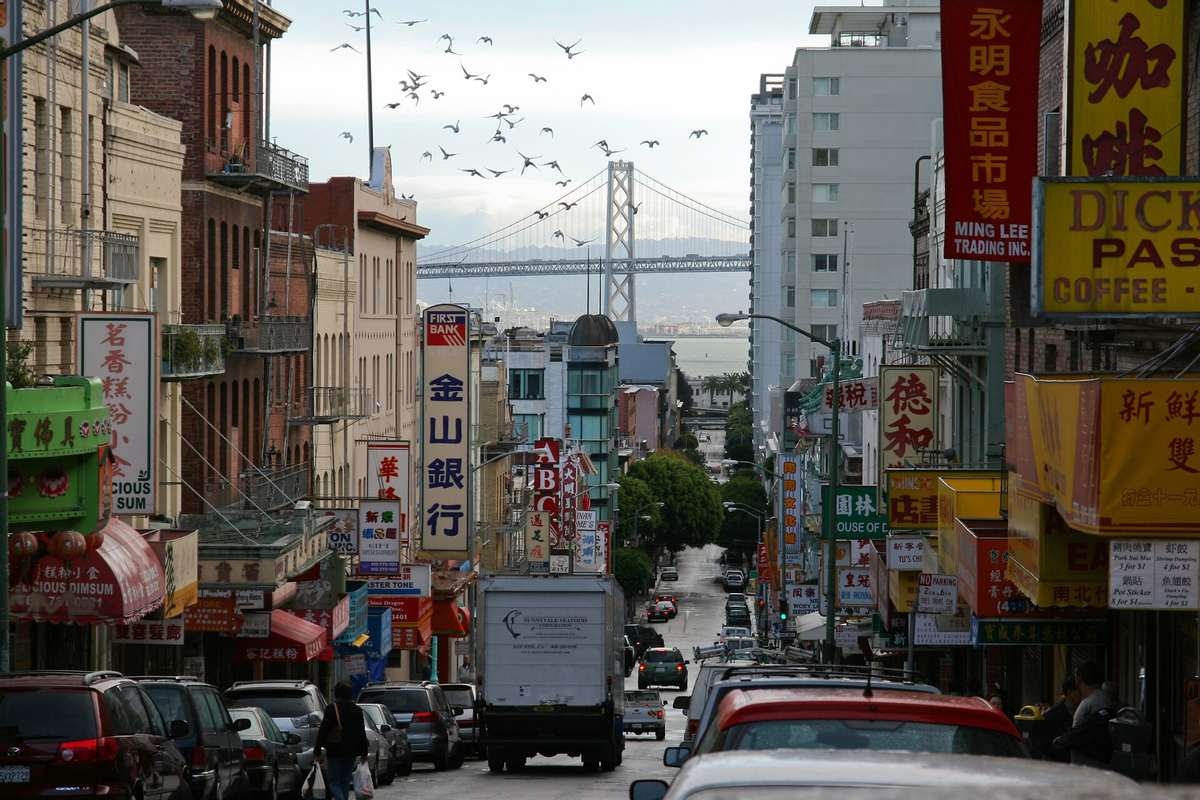
Chinatown in San Francisco is a compact downtown neighborhood built around Grant Avenue and Stockton Street. The city calls it the largest Chinatown outside Asia and the oldest in North America. The streets are free and open at all hours. People come for the history of Chinese immigration, old churches, shops, dim sum and the lanterns.
Chinatown history: from the Gold Rush to today
According to the National Park Service, the Gold Rush of 1848 drew Chinese laborers to San Francisco, and by 1870 more than 30,000 of them had established Chinatown. The city's own site, sf.gov, says Chinese residents joined the celebrations in Portsmouth Square when California was admitted to the Union. The SFMTA notes the square is also the site of the city's original customs house.
On May 6, 1882, President Chester A. Arthur signed the Chinese Exclusion Act. The National Archives calls it the first significant law restricting immigration into the United States. It suspended the immigration of Chinese laborers for 10 years and barred courts from granting citizenship to Chinese residents. Congress repealed the exclusion acts in 1943, during World War II, and even then a quota held Chinese immigration to 105 people a year.
The 1906 earthquake and fire destroyed Chinatown. The Park Service estimates that about 15,000 Chinese lived there and most lost nearly everything. Most left for Oakland and about 400 stayed in the city, moved by the Army to ever more remote camps that ended near Fort Point in the Presidio. The Chinese were the only group segregated in those camps. Some officials had wanted to move the Chinese to Hunters Point and take the valuable land downtown. A committee on the location of Chinatown dropped the plan once officials saw the city would lose tax revenue and trade with Asia. Residents were allowed to return, and the neighborhood was rebuilt where it had stood. It has now been in the same place for more than a century.
The Chinese Historical Society of America was founded in 1963, and its museum is on Clay Street today. In November 2022 the Central Subway opened, giving Chinatown its own Muni Metro station.
What to see in Chinatown
Chinatown Gate and Grant Avenue. The classic way in is the Chinatown Gate at Grant Avenue and Bush Street. Through it you step onto Grant Avenue, and sf.gov suggests taking pictures under the lanterns.
Stockton Street. The street where the neighborhood itself shops, lined with Chinese grocery stores. Chinatown-Rose Pak subway station is at Stockton and Clay streets.
Portsmouth Square. Chinatown's main square. The SFMTA describes community members gathering here to sing and play mahjong.
Old St. Mary's Cathedral. A Catholic church at 660 California Street, on the edge of the neighborhood. The parish says its tower survived the 1906 earthquake and that the Paulist Fathers have cared for the church since 1894. A self-guided tour pamphlet is available inside.
Chinese Historical Society of America Museum. At 965 Clay Street, in the landmarked former Chinatown YWCA building designed by Julia Morgan. It tells the story of Chinese people in the United States.
Waverly Place and the alleys. The First Baptist Church on Waverly Place is, per the SFMTA, where the mothers in Amy Tan's novel "The Joy Luck Club" met. The city suggests walking the alleys as a self-guided mural tour.
Fortune cookies and the Great Star Theater. The Golden Gate Fortune Cookie Factory sells fortune cookies to take home. The Great Star Theater, per sf.gov, first opened in 1925 and still hosts live shows.
How to get to Chinatown
- Muni Metro. The T Third line runs through the Central Subway to its Chinatown-Rose Pak station at Stockton and Clay streets, with connections to other lines at Powell.
- BART. From Montgomery Street station, walk north on Montgomery or Sansome Street to Bush Street, turn left toward the Chinatown Gate, then right onto Grant Avenue, as sf.gov suggests.
- Bus. Muni lines 1 and 30 run through Chinatown. Many others stop nearby; the full list is on the SFMTA Chinatown page.
- Cable car. The California, Powell/Hyde and Powell/Mason lines all run nearby. The California line runs from Market Street to Van Ness Avenue.
- By car. The city's Portsmouth Square Garage is at 733 Kearny Street, with a height clearance of 6 feet 8 inches.
For neighborhoods, Russian-speaking places and more, see our San Francisco city guide.
Chinatown hours and tickets
The streets are free and open around the clock. You pay for the museum, transit and parking.
| What | Hours | Price |
|---|---|---|
| Chinese Historical Society museum, 965 Clay St. | Wednesday and Saturday, 10 a.m. to 5 p.m. | students, seniors, veterans $10; EBT and Medi-Cal $3; adult price on the museum site |
| Old St. Mary's Cathedral, 660 California St. | Tue-Fri 10 a.m. to 4:30 p.m., Sat 11:30 a.m. to 6 p.m., Sun from 8:30 a.m., closed Mon | no fee mentioned on the parish site |
| Portsmouth Square Garage, 733 Kearny St. | Sun-Thu 5 a.m. to midnight, Fri-Sat 5 a.m. to 1 a.m. | $4 an hour, $38 daily maximum |
| Muni single ride | $2.85 with Clipper or MuniMobile, $3 cash | |
| Cable car single ride | $9 |
Hours and prices checked November 11, 2026 on chsa.org, osmsf.org and sfmta.com. The parish site lists Sunday hours two different ways, and transit and garage rates change, so check the SFMTA fares page before you go.
Tips before you visit Chinatown
- The museum opens only on Wednesdays and Saturdays. Plan around that.
- Personal photography without flash is allowed in the museum galleries. Filming for TV or film needs approval.
- Youth 18 and under ride regular Muni free, but not the cable car, where only children 4 and under ride free.
- At the Powell and Market cable car terminal you must buy your fare in advance between 8 a.m. and 8 p.m.
More San Francisco sights with their own pages are in places to see in San Francisco.
Questions people ask
Where is Chinatown in San Francisco?
San Francisco's Chinatown sits downtown around Grant Avenue and Stockton Street. The main entrance is the gate at Grant Avenue and Bush Street. The Muni Metro T Third line stops at Chinatown-Rose Pak station on Stockton Street, and Montgomery Street BART station is a short walk from the gate.
Do you have to pay to enter Chinatown?
No. Chinatown's streets are free and open around the clock like any city neighborhood. You pay only for things like the Chinese Historical Society of America museum on Clay Street, a Muni ride ($2.85 with Clipper), a cable car ride ($9) or parking at the Portsmouth Square Garage ($4 an hour).
Why was Chinatown rebuilt in the same place after 1906?
After the 1906 earthquake and fire, some officials wanted to move the Chinese to Hunters Point and take the downtown land. The National Park Service says the plan failed once officials realized the city would lose tax revenue and trade. Residents were allowed to return and rebuild where Chinatown had stood.
When is the Chinese history museum in Chinatown open?
The Chinese Historical Society of America museum at 965 Clay Street is open Wednesdays and Saturdays from 10 a.m. to 5 p.m. Students, seniors and veterans pay $10, and EBT and Medi-Cal cardholders pay $3. Check the museum's site for the standard adult price before you go.
Places on the map
Sources
- SF.gov: Perfect day in Chinatown
- SFMTA: Chinatown connects to Muni Metro
- SFMTA: Central Subway
- SFMTA: Cable cars
- SFMTA: Muni fares
- SFMTA: Portsmouth Square Garage
- National Park Service: 1906 Earthquake, Chinese Displacement
- National Archives: Chinese Exclusion Act (1882)
- Chinese Historical Society of America: Visit
- Chinese Historical Society of America: Visitor FAQs
- Chinese Historical Society of America: About
- Old St. Mary's Cathedral
- SFMTA: Central Subway opens November 19 (2022)