RussiansInUSA editorial team · Facts checked November 18, 2026 · Official site
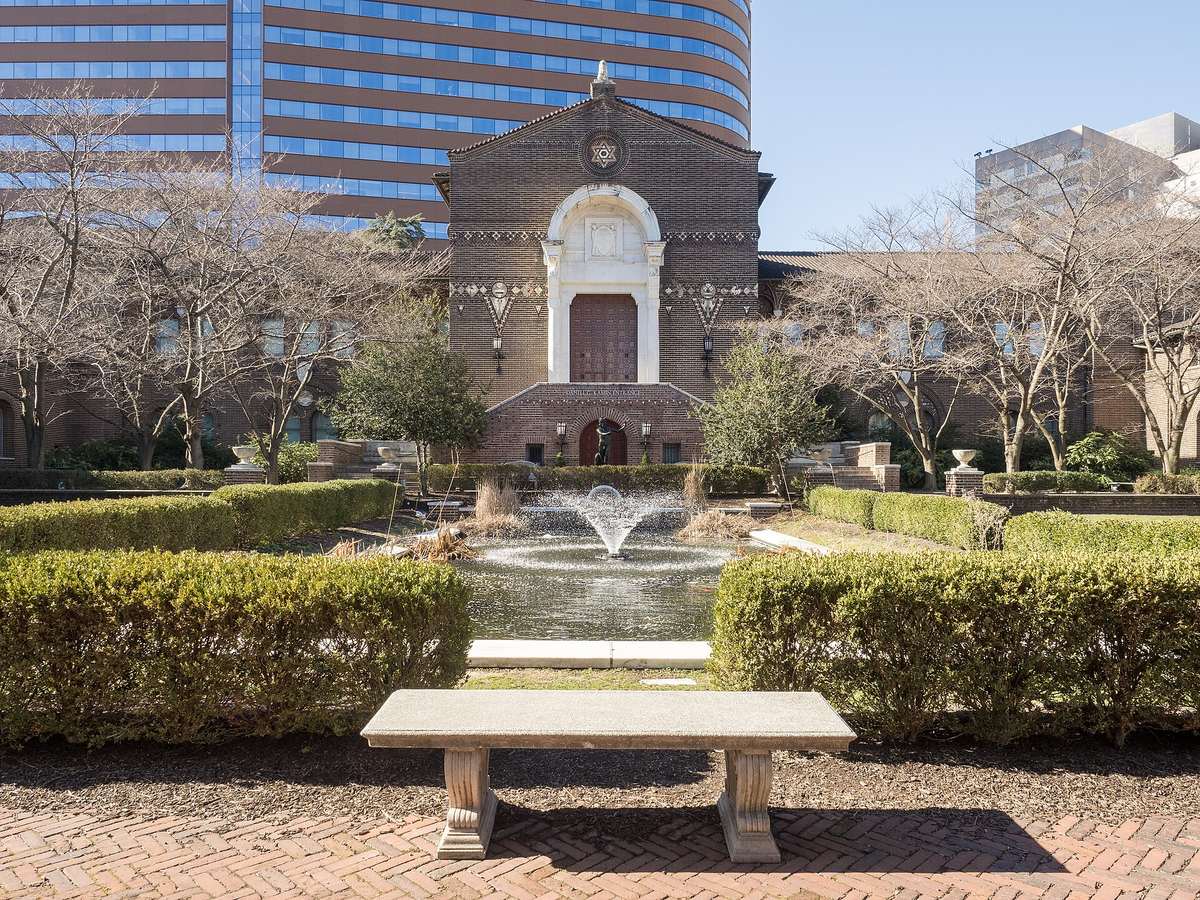
The Penn Museum, the University of Pennsylvania Museum of Archaeology and Anthropology, stands at 3260 South Street in University City, Philadelphia, just off the South Street Bridge. It holds more than a million objects from digs on every continent: a 13-ton granite sphinx of Ramses II, Queen Puabi's gold from Ur, Tang dynasty horse reliefs. It is open Tuesday to Sunday, 10 am to 5 pm, and an adult ticket is $23.
History of the Penn Museum
The museum grew out of a single expedition. In 1887 the Babylonian Exploration Fund was set up at Penn to send a dig to Nippur in Mesopotamia. Professor of Semitics John Punnett Peters pushed the idea, Philadelphia banker Edward White Clark helped raise the money and Provost William Pepper backed it. The first Nippur expedition was in the field by 1889.
The first exhibition opened on December 13, 1889, in the old examination hall on the third floor of College Hall, and the museum formally opened to the public on January 2, 1890. In 1892 Sara Yorke Stevenson, curator of the Egyptian and Mediterranean sections, began the push for a building of its own. Pepper got the land from the city in 1894, and the first section opened in 1899.
A team of architectural firms led by Wilson Eyre designed it in red brick and white marble under terracotta roof tiles. The Harrison Rotunda went up in 1915 and the Coxe Memorial Egyptian Wing in 1924. The museum says the building took more than a century, from 1899 to 2005; the Mainwaring Wing for the most perishable collections opened in 2002. The official name from 1913 was The University Museum; two renamings in the 1980s and 1990s gave it today's name.
Its most famous dig was Ur, in Iraq, from 1922 to 1934, a joint expedition with the British Museum led by Leonard Woolley that uncovered the Royal Tombs of 2650 to 2550 BC. Under director Froelich Rainey (1947 to 1976) the museum dug at Gordion in Turkey and Tikal in Guatemala. Today more than 400,000 of its objects are online, and over 180,000 people visit each year.
What to see at the Penn Museum
There are ten permanent galleries: Africa, Ancient Egypt and Nubia, Asia, the Eastern Mediterranean, Etruscan Italy, Greece, Rome, Mexico and Central America, the Middle East and Native North America.
The Sphinx of Ramses II
The 13-ton red granite sphinx stands in the Sphinx Gallery. Flinders Petrie excavated it in 1912 near the Temple of Ptah at Memphis. The museum calls it the largest sphinx in the Western Hemisphere.
Egypt and Nubia
The collection runs from about 4000 BC to the 7th century AD and is, the museum says, one of the largest in the United States. It includes the 4,300-year-old tomb chapel of Kaipure. The Egypt galleries are being rebuilt in stages, so check penn.museum for which are open; Egyptian objects are also shown elsewhere in the building.
The Middle East
These galleries tell how Mesopotamia produced the world's first cities. Look for Queen Puabi's funerary ensemble from Ur with its headdress of gold wreaths, a lyre fragment from 2450 BC and a wine jar from 5400 to 5000 BC, one of the oldest known wine storage vessels.
Asia in the Rotunda
The Asia galleries fill the 90-foot Rotunda. The 49-pound "Dowager Empress" crystal ball is the fourth-largest rock crystal sphere in the world. Nearby are reliefs of Emperor Taizong's horses from 649 and a gilt-bronze Maitreya dated 536.
More galleries
Africa shows objects from 21 countries; Rome shows Roman domestic life through objects from their houses, from miniature glass vessels to large marble reliefs. The Native North America gallery opened in November 2025, prepared with eight Indigenous consultants. A free digital guide is on the Bloomberg Connects app.
How to get to the Penn Museum
- Train. SEPTA Regional Rail stops at Penn Medicine Station, near the museum, one stop from Gray 30th Street Station on SEPTA's timetable.
- On foot. The museum is a short walk from 30th Street Station and from the Schuylkill Banks Boardwalk.
- SEPTA Metro. The L (Market-Frankford Line) stops at Drexel Station at 30th St and 34th St, and trolleys T1 to T5 stop at Drexel Station at 30th St and 33rd St, on Market Street north of the museum; walk south through campus.
- Bus. Several SEPTA bus routes stop nearby; plan the trip on septa.org.
- Bike. There is plenty of bike parking and an Indego station on site.
- Car. The Museum Garage is on Convention Avenue, just east of the museum, across from Penn Medicine Station; spaces for museum guests may be free even when the sign says full or permit only. Alternatives are Penn Park Garage at 31st and Lower Walnut Streets and Chestnut 34 Garage, entered from 34th Street just north of Chestnut; both take ParkMobile reservations. Pay by card before you leave.
Penn Museum hours and tickets
| Tuesday to Sunday | 10 am to 5 pm |
| Monday | closed |
| Adults | $23 |
| Seniors 65+ | $21 |
| Youth 6 to 17 and college students | $14 |
| Children 5 and under | free |
| Members; Penn faculty, staff and students | free |
Hours and prices checked November 18, 2026 on penn.museum.
The museum is closed on the holidays Penn observes, among them Martin Luther King Jr. Day, Easter, Juneteenth, Independence Day, Thanksgiving, Christmas Eve, Christmas Day, New Year's Eve and New Year's Day. Walk-up free admission covers ACCESS/EBT card holders, active military and veterans, K-12 teachers, Tribal Card holders and Philadelphia high-school students with ID. Some days are free for everyone; they are on the events calendar linked from the tickets page. Sales are final, but you can reschedule within a year.
Tips for your visit
- Large backpacks, suitcases and umbrellas go in lockers on the Lower Level near the East Entrance and near Harrison Auditorium.
- Personal photos are fine; no flash, tripods, monopods or selfie sticks.
- No outside food or drink except bottled water. The Museum Café is closed on Mondays.
- Strollers are welcome.
For more of the city, see our Philadelphia city guide and what to see in Philadelphia.
Questions people ask
How much is admission to the Penn Museum?
An adult ticket to the Penn Museum costs $23, seniors 65 and over pay $21, and youth 6 to 17 and college students pay $14. Children 5 and under, museum members and Penn faculty, staff and students get in free. Prices were checked on penn.museum on November 18, 2026.
What days is the Penn Museum open?
The Penn Museum is open Tuesday through Sunday from 10 am to 5 pm. It is closed on Mondays and on the holidays the University of Pennsylvania observes, including Thanksgiving, Christmas Eve, Christmas Day and New Year's Day. The full list is on the museum's visitor guidelines page.
How do I get to the Penn Museum by train?
Take SEPTA Regional Rail to Penn Medicine Station, which is near the museum and one stop from Gray 30th Street Station. The museum is also a short walk from 30th Street Station itself, The L stops at Drexel Station at 30th St and 34th St, trolleys T1 to T5 at Drexel Station at 30th St and 33rd St, and several SEPTA bus routes stop nearby.
Where is the sphinx in the Penn Museum?
The 13-ton red granite sphinx of Ramses II stands in the Penn Museum's Sphinx Gallery. Flinders Petrie excavated it near the Temple of Ptah at Memphis in 1912, and the museum calls it the largest sphinx in the Western Hemisphere.
Places on the map
Sources
- Penn Museum
- Penn Museum: Plan Your Visit
- Penn Museum: Tickets
- Penn Museum: Getting Here
- Penn Museum: Visitor Guidelines
- Penn Museum: Museum Cafe
- Penn Museum: Our Story
- Penn Museum: Galleries and Exhibitions
- Penn Museum: Ancient Egypt and Nubia Galleries
- Penn Museum: Middle East Galleries
- Penn Museum: Asia Galleries
- Expedition Magazine: A Brief History of the Penn Museum (2012)
- Expedition Magazine: Architectural Archaeology (1999)
- SEPTA: Penn Medicine Station timetable
- Penn Today: The journey from Egypt to Philadelphia of the Penn Museum's sphinx
- Penn Today: Native North America Gallery opens at the Penn Museum
- Penn Museum: Rome Gallery
- SEPTA: T Subway-Surface Trolleys
- SEPTA: L1 Market-Frankford Line