RussiansInUSA editorial team · Facts checked November 11, 2026 · Official site
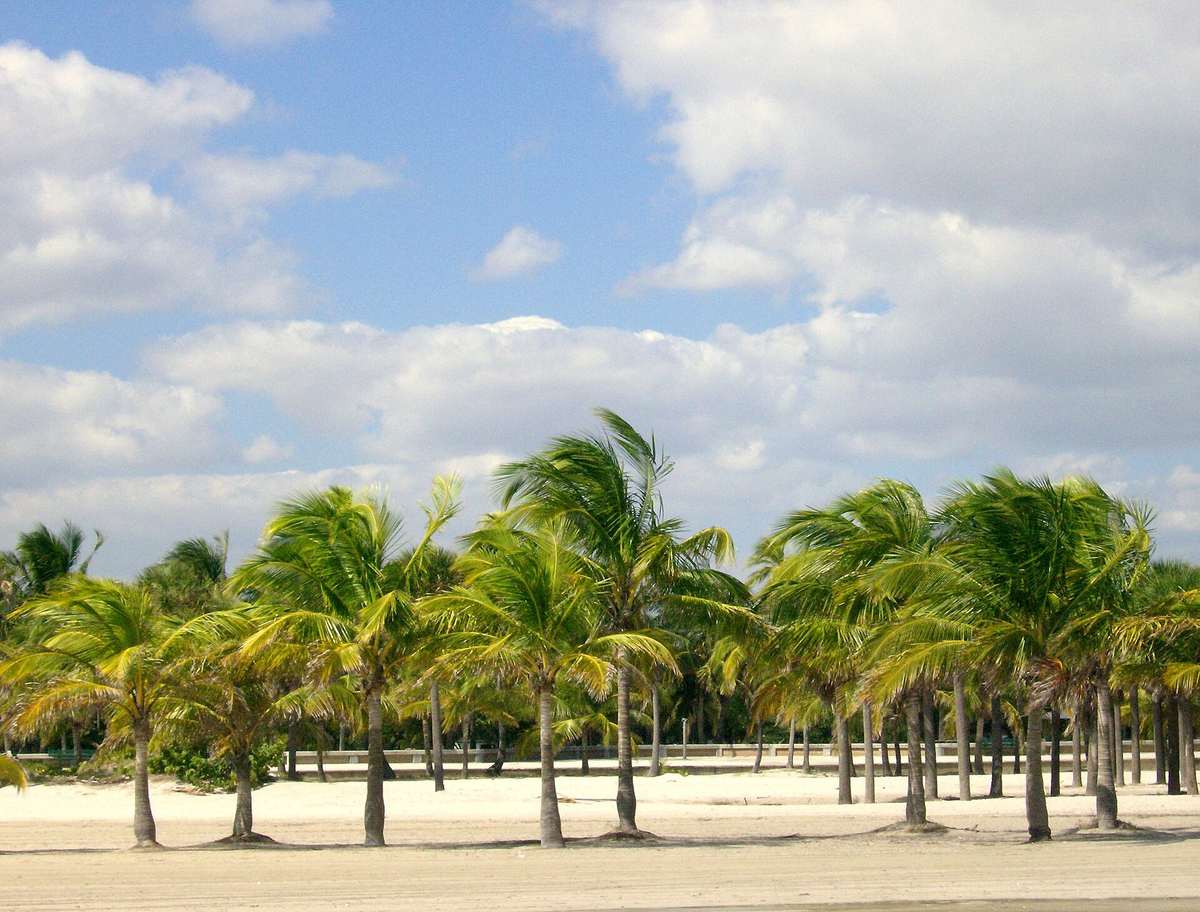
Crandon Park in Miami is a Miami-Dade County park on the northern part of Key Biscayne, the island reached from the mainland by the Rickenbacker Causeway. It has a two-mile beach that, the county says, is consistently named among the top 10 in the nation, a nature center with mangroves and a fossilized reef, a marina, an 18-hole golf course and a tennis center, all along Crandon Boulevard. Entry is free; you pay for parking, from $7 on weekdays.
Crandon Park history
Commodore William John Matheson, a wealthy aniline dye businessman, bought the north side of Key Biscayne in 1908. According to the county parks department's history sheet, he planted a coconut plantation on 1,700 acres, at least twice as large as any other in the United States, with 36,000 coconut trees and 42 workers by 1915. In 1921 he introduced the Malay Dwarf coconut to the US, now the most common variety in Florida. By 1933 world coconut prices had fallen to about two-fifths of their 1925 level and the plantation stopped shipping.
Long before that, the Tequesta lived on the island. After Hurricane Andrew in 1992, three archaeological areas were found in the park, including post hole molds near the former zoo that may show the size of Tequesta thatch houses. A relic dune running about 1,000 feet from the Bear Cut preserve toward Crandon Boulevard now carries a bike path on its crest.
In 1940 Matheson's heirs donated the land to the county on the condition that it stay a public park. In exchange, County Commission Chairman Charles H. Crandon, the park's namesake, offered to have the county build a causeway to the island. The Rickenbacker Causeway and Crandon Park opened to the public on Sunday, November 9, 1947.
Zoo Miami started here. In 1948 the county bought three monkeys, a goat and two black bears for $270 from a traveling show stranded near Miami, and opened the Crandon Zoo on 53.5 acres at the south end of the park. By 1965 it held over 1,000 animals of about 380 species. In 1967 it reported the first successful birth and rearing of an aardvark, and in 1973 two southern bald eagles hatched there. The carousel with its restored 1949 jumping horses is still in the park.
What to see in Crandon Park
The beach
The beach runs two miles. An offshore sandbar shelters swimmers from the surf, though its shape shifts with weather and currents. Along it are a winding promenade, concession stands and picnic areas with tables and grills. Cabanas are for rent at the south end, and beach wheelchairs are available. Flotation devices are not allowed (Chapter 26 of the county code, Rule 16). Personal kayaks and paddleboards cannot launch from the beach; launch them from the marina, or rent at the beach concession, which also offers kiteboarding gear and lessons.
Nature center and Bear Cut
The Visitor and Nature Center at 6767 Crandon Boulevard covers dunes, mangroves, coastal hammock and seagrass beds. The park's self-guided trails include a mangrove boardwalk to an overlook of the fossilized reef, which the county's history sheet calls unique in the world. Bear Cut Preserve is visited with a naturalist, and Crandon Beach and Bear Cut are both sites on the Great Florida Birding and Wildlife Viewing Trail. Book EcoAdventures tours at 305-666-5885.
Carousel, golf, tennis and marina
The Amusement Center (6747 Crandon Boulevard) has the historic carousel with its 1949 horses and an outdoor roller rink. The golf course (6700 Crandon Boulevard) is an 18-hole, par-72 public course with a lighted driving range. The tennis center (7300 Crandon Boulevard) has 27 courts. The marina (4000 Crandon Boulevard) takes boats up to 80 feet, has a 24-hour boat ramp, power boat rentals, charter fishing and a dive shop.
How to get to Crandon Park
By car, take the Rickenbacker Causeway and then Crandon Boulevard, where every part of the park has its address. The beach has parking for just under 3,000 vehicles.
By bus: the county describes Metrobus route 26 as local service seven days a week from Brickell Metrorail and Metromover station to Key Biscayne along the Rickenbacker Causeway and Crandon Boulevard. Check the schedule on the county's Metrobus page before you go. The fare is $2.25, or $1.10 discounted.
Crandon Park hours and parking fees
| What | Hours | Price |
|---|---|---|
| Beach parking, Monday to Thursday | $7 plus tax | |
| Beach parking, Friday to Sunday | $10 plus tax | |
| Park office | daily 8 a.m. to 5 p.m. | |
| Visitor and Nature Center | daily 9 a.m. to 4 p.m. | |
| Golf course | 7 a.m. to sunset | |
| Tennis center | Mon-Fri 8 a.m. to 10 p.m., Sat-Sun 8 a.m. to 6 p.m. | |
| Marina office | daily 8 a.m. to 5 p.m. | |
| Marina boat ramp | 24 hours |
Hours and prices checked November 11, 2026 on miamidade.gov. Under the county park rules, parks are closed between sunset and sunrise unless posted otherwise. Golf, tennis and rental prices are on the Crandon Park page.
What to bring and what to leave home
No glass containers. No pets, except service animals. Fires go only in a grill or other approved container and must be put out before you leave. At picnics, county rules allow alcohol only from noon to sundown. Parking costs less Monday to Thursday. For more sights, see things to see in Miami and the Miami city guide.
Questions people ask
How much does it cost to get into Crandon Park?
Entry to Crandon Park is free; you pay for parking. It costs $7 plus tax Monday through Thursday and $10 plus tax Friday through Sunday, with just under 3,000 spaces at the beach. Miami-Dade County lists these prices on its Crandon Park page, checked November 11, 2026.
Are dogs allowed at Crandon Park?
No. Miami-Dade County prohibits pets at Crandon Park, with an exception only for service animals. If you want a beach for your dog, look at another county park and check its rules on miamidade.gov before you go.
Can you get to Crandon Park by bus?
Yes. Metrobus route 26 runs seven days a week from Brickell station over the Rickenbacker Causeway and along Crandon Boulevard on Key Biscayne. The regular fare is $2.25. Check the current schedule on the Miami-Dade Metrobus page before you go.
Who is Crandon Park named after?
It is named for Charles H. Crandon, chairman of the Dade County Commission. In 1940 William Matheson's heirs donated the land to the county for a public park, and Crandon offered a causeway to Key Biscayne in exchange. The park and the Rickenbacker Causeway opened on November 9, 1947.