RussiansInUSA editorial team · Facts checked November 11, 2026 · Official site
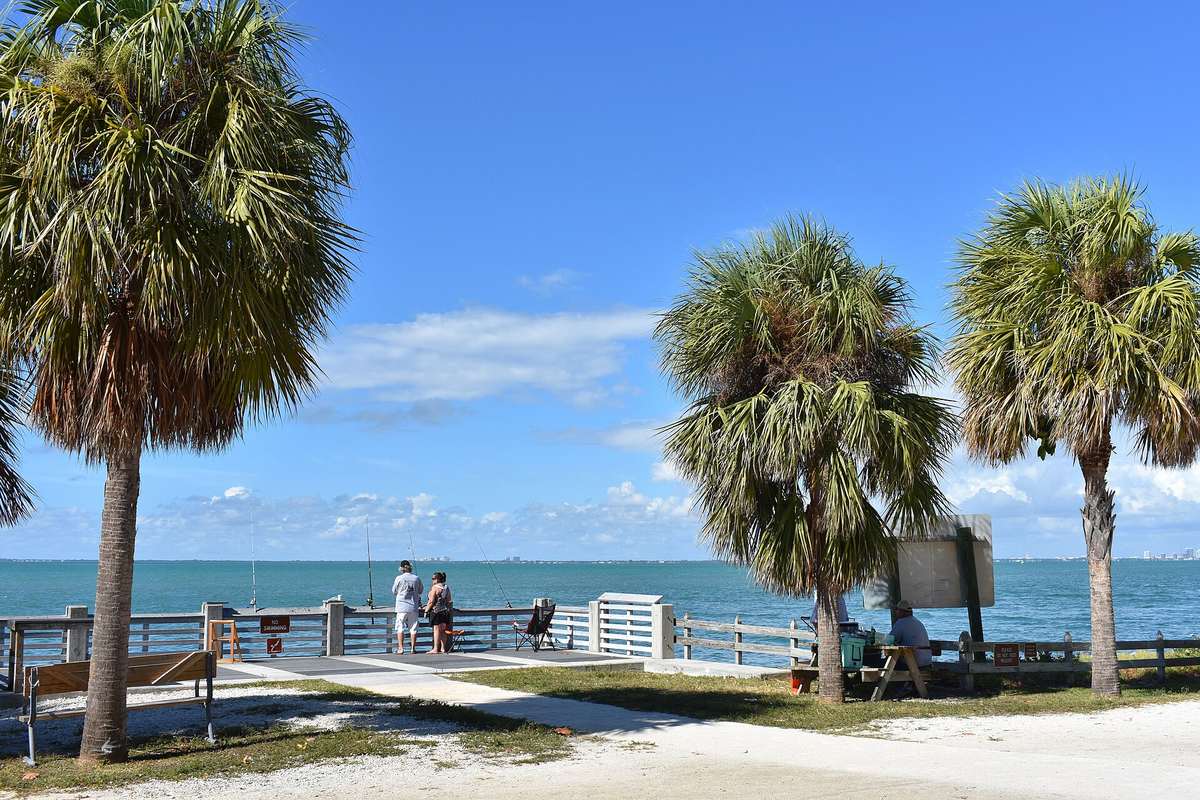
Bill Baggs Cape Florida State Park covers the southern tip of Key Biscayne in Miami, between Biscayne Bay and the Atlantic Ocean. It holds the Cape Florida Lighthouse, built in 1825 and the oldest standing structure in Miami-Dade County, and more than 1.2 miles of sandy ocean beach. People come for the beach, the view of the city from the water and a history you will not find anywhere else in Miami.
The park sits about seven miles southeast of the City of Miami. Friends of Cape Florida, a nonprofit that supports the park, puts its attendance at about 1,000,000 visitors a year. If you are still planning the trip, start with our Miami city guide.
History of Cape Florida and its lighthouse
The lighthouse went up in 1825 to mark the northern end of the Florida Reef. According to the U.S. Coast Guard, the first tower was 65 feet tall, solid brick, 5 feet thick at the base. It was one of the first lighthouses Congress commissioned after Florida became a US territory in 1821.
On July 23, 1836, during the Second Seminole War, Seminoles attacked the station. Assistant keeper John W. B. Thompson and an older Black man who worked with him barricaded themselves in the tower. The attackers set the door on fire and the flames climbed the wooden stairs. Thompson's companion died. Thompson, wounded and burned, was rescued by sailors from the schooner Motto, who had heard the gunpowder explode 12 miles away. They got him down from the top with a line fired from a musket. The Coast Guard history page quotes his own account of that night.
Rebuilding was authorized in 1837 but finished only in 1846, because hostile Seminole bands remained nearby in the Everglades. In 1855 the tower was raised to its current 95 feet. The lighting apparatus was destroyed in 1861, during the Civil War, and restored in 1867. In 1878 the light was put out when the new Fowey Rocks light went into service on the reef offshore. The tower and land were later sold to James Deering of Chicago, the builder of Villa Vizcaya.
Friends of Cape Florida also describe Cape Florida as a departure point on the "Saltwater Underground Railroad", used by people escaping slavery for the islands.
In the 1950s developers planned hotels and homes here. Friends of Cape Florida say they cut down every tree on 400 acres. According to the state management plan, a seawall went up along the shore in 1949 and 1950, with dredged fill pumped in behind it. Bill Baggs, editor of the Miami News, campaigned for the state to buy the land and talked the owner down to half his asking price. On March 31, 1966, the state took title to the first 100 acres of the park. Baggs wrote more than 3,000 columns, and the paper won three Pulitzer Prizes under his leadership. The park carries his name.
The lighthouse was relit as a navigation aid on June 15, 1978. According to the state management plan, Hurricane Andrew in 1992 wiped out the non-native Australian pine forest, and the park has spent decades restoring mangroves, dunes and coastal hammock. In 1995 and 1996 the lighthouse itself was restored for $1,000,000 with the Dade Heritage Trust. It is listed on the National Register of Historic Places, and December 17, 2025 marked 200 years since it was first lit.
What to see in the park
The lighthouse and keeper's cottage. The white brick tower stands at the southern edge of the island. Next to it are a keeper's cottage and kitchen built in 1970 and furnished as a small museum of the keepers' life. The state management plan notes they are interpretive buildings, not copies of the original ones.
The view from the top. From the gallery you can see Stiltsville, Key Biscayne and downtown Miami. Friends of Cape Florida run private sunset tours that last 60 to 90 minutes.
The beach. More than 1.2 miles of Atlantic beach, the main draw for most visitors. A line of buoys marks the swimming area.
Fishing on the bay side. The park's management plan describes shoreline fishing along the bay seawall, with a view of the Miami skyline. Check the park's page for where fishing is allowed now.
No Name Harbor. A small harbor on the bay side of the park. Check the park's page for current boating and docking rules.
Wildlife. Since Hurricane Andrew the park has restored mangroves, dunes and coastal hammock. The state management plan lists green, leatherback and loggerhead sea turtles, the American crocodile, the Florida manatee and the peregrine falcon here, and sea turtles nest on the beach.
Picnics, food and rentals. Check the park's page for which cafes, picnic pavilions and rentals are open now; we found no current official list.
How to get to Bill Baggs Cape Florida State Park
By car from Miami, take the Rickenbacker Causeway to Key Biscayne and follow Crandon Boulevard to its end, which is the park entrance. Friends of Cape Florida give the address as 1200 S. Crandon Blvd., Key Biscayne, FL 33149.
Boaters can come in through No Name Harbor from the bay.
Without a car, check Miami-Dade Transit routes and schedules on the county bus page. The lighthouse is at the far southern end of the park from the entrance.
Hours and tickets
| What | Where to find it |
|---|---|
| Park hours and entrance fee | the park's page on Florida State Parks |
| Private sunset lighthouse tour | Friends of Cape Florida, by email to INFO@FriendsCapeFlorida.org, 60 to 90 minutes, subject to availability |
| Friends of Cape Florida phone | 786-582-2673 |
Hours and prices checked November 11, 2026 on friendscapeflorida.org. The Florida State Parks site did not load for us that day, so we do not list hours or the entrance fee: look them up on the park's page before you go. Friends of Cape Florida do not post tour prices; they give them when you book.
Tips before you go
Most visitors come for the beach, picnics and fishing, and the lighthouse and museum are easy to skip. Set time aside for them: the entrance is at the north end of the park, and the lighthouse stands at the southern tip of the island.
Swim only inside the area marked by buoys.
Leave sea turtle nests alone. Friends of Cape Florida run a sea turtle survey program and let you adopt a nest.
The Village of Key Biscayne posts swim advisories on keybiscayne.fl.gov, so check it before a beach day. For more of the city, see places to visit in Miami.
Questions people ask
How old is the Key Biscayne lighthouse?
The Cape Florida Lighthouse was first built in 1825, and December 17, 2025 marked 200 years since it was first lit. The present tower dates from 1846, after the 1836 Seminole attack, and was raised to 95 feet in 1855. It is the oldest standing structure in Miami-Dade County.
Can you climb the Cape Florida Lighthouse?
Friends of Cape Florida offer private sunset tours that include a climb of the lighthouse. They last 60 to 90 minutes, depend on availability and are booked by email at INFO@FriendsCapeFlorida.org. From the top you see Stiltsville, Key Biscayne and downtown Miami. Prices are given at booking.
Who was Bill Baggs?
Bill Baggs was editor of the Miami News. He campaigned for the State of Florida to buy the southern end of Key Biscayne instead of letting it become hotels and condominiums, and got the owner to cut the price in half. The state took title to the first 100 acres on March 31, 1966.
Can you fish or stay overnight at Cape Florida?
The park's management plan describes shoreline fishing along the Biscayne Bay seawall. Rules for fishing, docking in No Name Harbor and overnight stays can change, so check them on the park's Florida State Parks page before you go.
Places on the map
Sources
- U.S. Coast Guard Historian's Office: Cape Florida Lighthouse
- Florida DEP: Bill Baggs Cape Florida State Park Approved Unit Management Plan (2012)
- National Park Service: Fowey Rocks Lighthouse
- Friends of Cape Florida: About
- Friends of Cape Florida: Bill Baggs
- Friends of Cape Florida: Lighthouse Tours (Private)
- Miami-Dade County: Bus and Trolley Routes and Schedules
- Village of Key Biscayne: Our Beach
- Florida State Parks: Bill Baggs Cape Florida State Park