RussiansInUSA editorial team · Facts checked November 18, 2026 · Official site
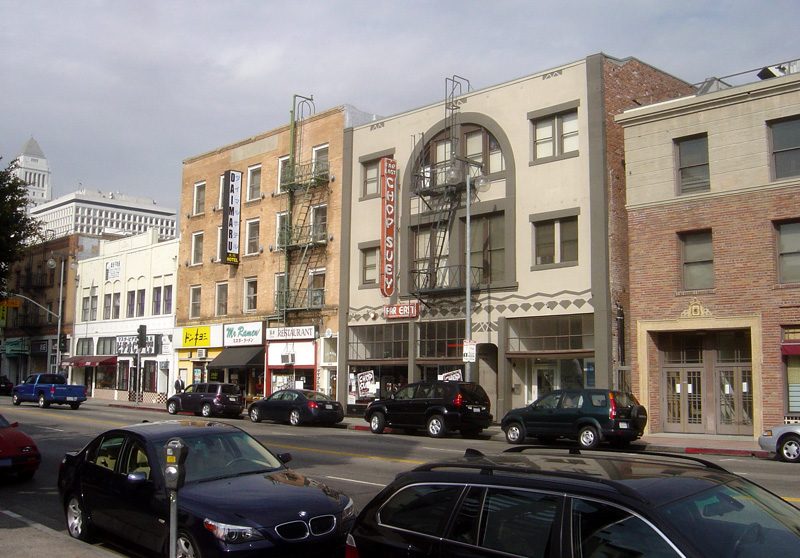
Little Tokyo in Los Angeles is the historic Japanese American neighborhood on the east side of downtown, around East First Street, Central Avenue, San Pedro Street and Judge John Aiso Street. The Little Tokyo Community Council calls it one of three historic Japantowns left in the United States and the second oldest neighborhood in the city. People come for Japanese food, temples, museums and the story of Japanese Americans. Walking the streets is free, and the Metro station sits right across from the Japanese American National Museum.
Little Tokyo history, from an 1884 restaurant to a National Historic Landmark
The Little Tokyo Community Council dates the neighborhood to 1884, when a former Japanese sailor opened the Kame Restaurant on East First Street; the Los Angeles City Council recognized it as the first Japanese-owned business in Little Tokyo. The National Park Service gives 1885 for the same restaurant.
The Rafu Shimpo newspaper and the Fugetsudo manju shop both started in 1903. Koyasan Buddhist Temple followed in 1912, the Japanese Union Church in 1923 and the Hompa Hongwanji Buddhist Temple on Central Avenue in 1925. Law pressed on the immigrants: the 1907 Gentlemen's Agreement stopped most Japanese laborers from coming, and the 1913 California Alien Land Law barred them from owning land. Nisei Week, a festival of Japanese American culture, began in 1934.
After Pearl Harbor, Executive Order 9066 forced more than 120,000 Japanese Americans from the West Coast. According to the NPS, Little Tokyo residents were sent away in 1942, and the Japanese Union Church and Hompa Hongwanji were used to process them. African Americans moved into the emptied blocks, which were known as Bronzeville from 1942 to 1945, with close to 80,000 residents by the NPS count.
The community council says decades of redevelopment and displacement reshaped the area after that. The Little Tokyo Historic District became a National Historic Landmark on June 12, 1995. In 2024 the neighborhood marked 140 years, and the National Trust for Historic Preservation put it on its list of America's 11 Most Endangered Historic Places.
What to see in Little Tokyo
Historic buildings on East First Street. The NPS points to the Mikado Hotel (331-335 E. First St., 1914), called the Shreveport Hotel in the Bronzeville years, and the Far East Building (347-353 E. First St., 1896, remodeled 1935). On Judge John Aiso Street stand the Japanese Union Church (No. 120, 1923) and the San Pedro Firm Building (1925). The 1925 Hompa Hongwanji temple building is at 119 N. Central Avenue.
Japanese American National Museum (JANM). At 100 North Central Avenue, the museum tells the Japanese American story, the wartime camps included. Its campus joins a former Buddhist temple building and a pavilion by architect Gyo Obata. The JANM Pavilion is closed for renovation now, and the museum reopens on January 23, 2027.
Go For Broke Monument. It carries the names of more than 16,000 Japanese Americans who served in World War II. The Go For Broke National Education Center (355 E. 1st Street) runs it and the Defining Courage exhibition.
Japanese American Cultural & Community Center (JACCC). At 244 S. San Pedro St., it has the Aratani Theatre and the MISE shop.
Japanese Village Plaza. A walkable plaza of Japanese shops and food.
How to get to Little Tokyo
Take Metro. The Little Tokyo/Arts District Station (402 E 1st Street) serves the A and E lines and sits across from JANM at First and Central. The B Line stops a few blocks away. DASH A stops along First Street, and DASH D runs within walking distance at 2nd/Main and Temple/Aiso. Metro bus lines 30/330, 40, 106 and 854 also serve the area. JANM puts Union Station about a 17-minute walk away.
Street parking is limited, but the community council counts more than 15 paid lots. Close to the museum are the Aiso Street Parking Garage (101 North Judge John Aiso Street) and Japanese Village Plaza Parking (115 South Central Avenue). The lot map is on the council's Getting to Little Tokyo page.
Hours and tickets
The neighborhood itself is always open and free. The museums and centers inside it keep their own hours:
| Place | Hours | Price |
|---|---|---|
| JANM | closed for renovation until January 23, 2027; after reopening Tue-Sun 11 a.m.-5 p.m., Fri to 8 p.m., closed Mon | adults $20, seniors 62+ $15, students and ages 6-18 $12, 5 and under free |
| Go For Broke Monument | limited hours, see goforbroke.org | free |
| Defining Courage exhibition | Fri 12:30-4:30 p.m., Sat-Sun 11:30 a.m.-5 p.m. | $10, seniors 62+ and students $5 |
| Koban visitor center (307 E. First St.) | 10 a.m.-5 p.m., call (213) 613-1911 for days | free |
Hours and prices checked November 18, 2026 on janm.org, goforbroke.org and littletokyokoban.org. JANM is closed for renovation and reopens on January 23, 2027; the hours and prices in the table apply from that day. After reopening it closes on Mondays, July 4, Election Day, Thanksgiving, Christmas Day, New Year's Day, February 19 (Day of Remembrance) and August 10. Schedules change, so check the museum's site before you go.
Tips before you go
- After it reopens on January 23, 2027, JANM is free on Fridays after 5 p.m. and on the first Friday of every month.
- Start at the Koban at 307 E. First Street: bilingual staff and volunteers hand out maps and directions.
- JANM cannot validate parking, so plan to pay for your lot.
- Festivals and events are on the Little Tokyo Community Council calendar.
More about the city is on our Los Angeles page, and other sights are in places to see in Los Angeles.
Questions people ask
Is it free to visit Little Tokyo?
Yes. The streets and plazas of Little Tokyo in downtown Los Angeles are always open and free to walk. Museums inside charge admission: the Japanese American National Museum is closed for renovation until January 23, 2027, and an adult ticket after it reopens is $20, while the Go For Broke Monument, with the names of Japanese Americans who served in World War II, is free.
What Metro station is closest to Little Tokyo?
The Little Tokyo/Arts District Station at 402 E 1st Street, on Metro's A and E lines. It sits across the street from the Japanese American National Museum at First Street and Central Avenue. DASH A also stops along First Street, and the B Line stops a few blocks away.
When is the Japanese American National Museum free?
JANM is closed for renovation now and reopens on January 23, 2027. After that it offers free admission on Fridays after 5 p.m. and on the first Friday of each month. Children 5 and under and members always enter free. The museum is closed on Mondays and on several holidays, including Thanksgiving, Christmas Day and New Year's Day.
Why was Little Tokyo called Bronzeville?
In 1942 Japanese American residents were removed to camps under Executive Order 9066. African Americans moved into the emptied neighborhood, known as Bronzeville from 1942 to 1945. The National Park Service says it grew to close to 80,000 residents, and the Mikado Hotel operated then as the Shreveport Hotel.
Places on the map
Sources
- Little Tokyo Community Council
- About Little Tokyo, Little Tokyo Community Council
- 140 Years of Little Tokyo, Little Tokyo Community Council
- Getting to Little Tokyo, Little Tokyo Community Council
- Little Tokyo Historic District, National Park Service
- National Historic Landmarks by state, National Park Service
- Visit, Japanese American National Museum
- About, Japanese American National Museum
- Visit, Go For Broke National Education Center
- Visit, Japanese American Cultural & Community Center
- Little Tokyo Koban, Little Tokyo Public Safety Association