RussiansInUSA editorial team · Facts checked November 11, 2026 · Official site
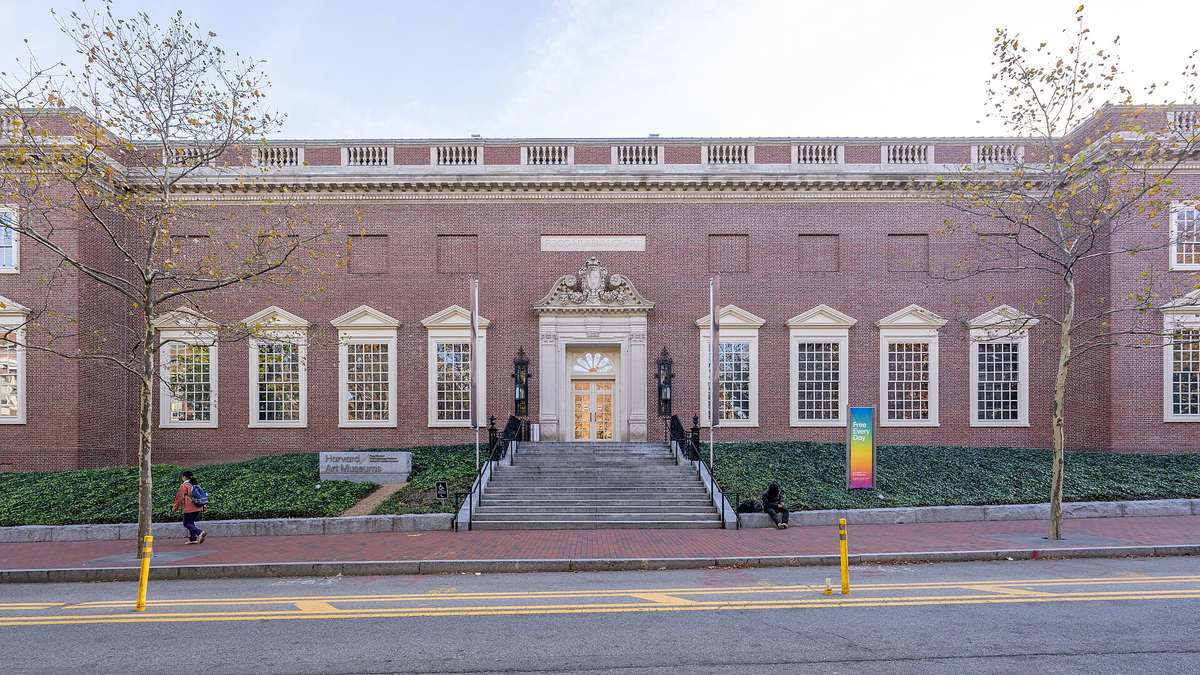
The Harvard Art Museums are three university museums under one glass roof at 32 Quincy Street in Cambridge, just outside Harvard Square and a short walk from Harvard station on the Red Line. Technically this is Cambridge, the city across the Charles River from Boston, not Boston itself. Admission is free for everyone, every day, and there are more than 50 galleries on three floors, from ancient art to contemporary work, including a Van Gogh self-portrait. For the rest of the city, see our Boston city page.
Harvard Art Museums history
It began with a gift. In 1891 Elizabeth Fogg gave Harvard College a gift for an art museum named after her husband, William Hayes Fogg. The Fogg Museum opened in 1895 on the northern edge of Harvard Yard and moved to 32 Quincy Street in 1927. The museums describe that building as the first one built specifically to train art scholars: a museum and a classroom at once.
The second museum was founded in 1903 as the Germanic Museum and renamed the Busch-Reisinger Museum in 1950. It collects art from German-speaking Europe.
The third, the Arthur M. Sackler Museum, opened in 1985 in a separate James Stirling building at 485 Broadway, for collections from Asia, the Middle East and the Mediterranean. Harvard's interest in Asian art is older: in 1912 Langdon Warner taught the first Asian art courses at Harvard, which the museums call the first at any US university.
The rebuild took six years. On November 16, 2014, the three museums reopened together in one building designed by Renzo Piano Building Workshop. A glass roof now joins the historic and new parts, and gallery space grew by 40 percent. The Harvard Gazette reported at the time that the building has 204,000 square feet, five floors above ground and three below.
What to see
The heart of the building is the Calderwood Courtyard, lit from above through the glass roof, with the galleries of all three museums around it.
Fogg Museum
Western paintings, sculpture and decorative arts, plus photographs, prints and drawings from the Middle Ages to today. The name many visitors come for is Vincent van Gogh: his 1888 Self-Portrait Dedicated to Paul Gauguin is listed by the collection page on Level 1, Room 1220, among 19th and 20th century European art from the Collection of Maurice Wertheim.
Busch-Reisinger Museum
Austrian Secession art, German Expressionism, 1920s abstraction, Bauhaus materials, late medieval sculpture, 18th century art and postwar and contemporary art from German-speaking Europe. At the 2014 reopening the Harvard Gazette named Max Beckmann's Self-Portrait in Tuxedo (1927) as part of this collection.
Arthur M. Sackler Museum
Art from Asia, the Middle East and the Mediterranean, now shown in the same Quincy Street building as the other two.
Art Study Center and conservation labs
Under the glass roof, the Art Study Center lets you request objects that are not on display. Book online at least two weeks ahead; appointments run Tuesday to Friday, 10am to 5pm. The Harvard Gazette described the Straus Center conservation labs on the top floors, visible through glass walls, as the first in the country to use scientific methods to study artists' materials.
Displays change. If you are going for one work, look it up in the online collection first; the object page lists its room.
How to get there from Boston
Take the MBTA Red Line to Harvard station, 1400 Massachusetts Avenue, Cambridge. The museums say the walk from there takes about five minutes. The station has elevators; plan your trip on the MBTA station page.
Driving is harder. The museums have no free or designated parking. The closest garage is Harvard's Broadway Garage at 7 Felton Street, which needs a purchased permit and is closed on weekends. Paid options nearby include the Church Street Lot (41 Church Street), Harvard Square Parking (Eliot and JFK Streets) and the Charles Square Garage (Bennett Street and University Road).
Visitors with mobility needs are encouraged to use the Prescott Street or Broadway entrances, both of which have curb cuts nearby.
Hours and tickets
| What | Now |
|---|---|
| Hours | Tuesday to Sunday, 10am-5pm |
| Closed | Mondays, major holidays and other select dates |
| Last Thursday of the month | open until 9pm (holidays permitting) for Harvard Art Museums At Night |
| Admission | free for everyone, every day |
| Registration | advance registration encouraged on weekends; walk-ins welcome |
| Groups of 8 or more | register three weeks ahead by email |
Hours and prices checked November 11, 2026, on harvardartmuseums.org. The museums keep the list of holiday closures and early closings on their hours page; check it before you go.
Rules and tips
- All bags may be inspected. Backpacks, larger items and umbrellas go in the self-service lockers on Level 1 and the Lower Level.
- Personal photos and video are fine. Flash, tripods, monopods, selfie sticks and smart glasses are not.
- No food, drinks or gum in the galleries. Jenny's Cafe is on Level 1 in the Calderwood Courtyard.
- Sketching is graphite pencil only; Visitor Services hands them out.
- Gallery-safe strollers and a limited number of free loaner wheelchairs are available.
For more sights, see our list of places to visit in Boston. The address for your map app is 32 Quincy Street, Cambridge, MA 02138.
Questions people ask
How much does it cost to visit the Harvard Art Museums?
Nothing. Admission is free for all visitors every day, and you do not need a Harvard connection. The museums encourage advance registration on weekends to shorten the wait at check-in, but walk-ins are welcome. Groups of eight or more must register three weeks ahead.
When are the Harvard Art Museums closed?
They open Tuesday to Sunday, 10am to 5pm, and close on Mondays, major holidays and select dates. On the last Thursday of each month they stay open until 9pm. The closure dates are listed on the museums' hours page.
Where is the Van Gogh at Harvard?
Vincent van Gogh's Self-Portrait Dedicated to Paul Gauguin, painted in 1888, is listed on the Harvard Art Museums collection page in Level 1, Room 1220, with 19th and 20th century European art from the Maurice Wertheim collection. Displays change, so check the room online before you go.
Can I take photos inside the Harvard Art Museums?
Yes, photos and video for personal use are allowed in the galleries and public spaces. Flash, tripods, monopods, selfie sticks and smart glasses are not allowed. Backpacks and umbrellas must go in the self-service lockers on Level 1 or the Lower Level.
Places on the map
Sources
- Harvard Art Museums
- Visit, Harvard Art Museums
- About, Harvard Art Museums
- History, Harvard Art Museums
- Renovation and expansion, Harvard Art Museums
- Hours and closings, Harvard Art Museums
- Plan your visit, Harvard Art Museums
- General policies, Harvard Art Museums
- Museum access, Harvard Art Museums
- Subway directions, Harvard Art Museums
- Parking, Harvard Art Museums
- Art Study Center, Harvard Art Museums
- Self-Portrait Dedicated to Paul Gauguin, Harvard Art Museums collection
- Harvard station, MBTA
- Harvard's new home for art, Harvard Gazette, 2014
- Renewed Harvard museums to reopen in a sparkling building, Harvard Gazette, 2014
- Harvard Art Museums At Night