RussiansInUSA editorial team · Facts checked November 5, 2026 · Official site
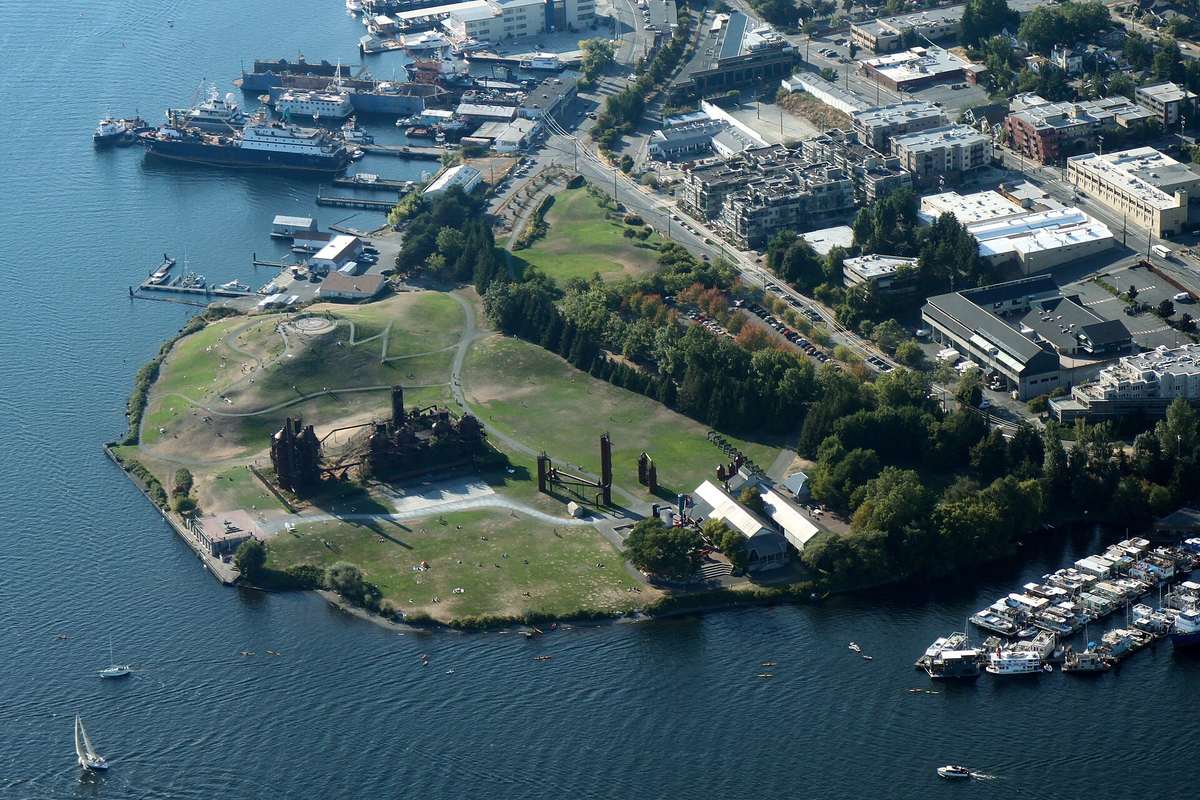
Gas Works Park in Seattle is a city park on the north shore of Lake Union, at 2101 N Northlake Way. It sits on the site of a plant that made gas from coal, and later from oil, from 1906 to 1956. The old plant towers were kept as a monument and left to weather, and a big grass hill next to them is where people fly kites. From the hill you look across the lake to downtown. The park is open from 6 a.m. to 10 p.m.
Gas Works Park history: from gas plant to park
Seattle made gas long before the park. A timeline Seattle Parks and Recreation presented to the city's Landmarks Preservation Board says the Seattle Gas Light Company was founded in 1873, with its first gas works near Pioneer Square. In 1906 the company opened a new plant on the park's current site. Coal gasification needed a lot of fresh water, which made the lakeshore a good fit.
The same timeline marks 1930: new technology made crude oil cheaper than coal, and the waterfront location meant oil could be unloaded straight from ships, so the plant moved from coal to oil. Natural gas reached Seattle in 1956, and the plant shut down later that year. In 1962 the city began buying the abandoned gas works.
The park was designed by Richard Haag. In 1971 the Park Board approved the master plan by his firm, Richard Haag Associates, built around keeping the industrial structures instead of clearing them. Haag described the plan as purposely under-designed, a strong skeleton that could change with the way people play. The park opened to the public in the mid-1970s: the 2017 Seattle Parks timeline gives 1975, while an expert report in the Landmarks Preservation Board's 2026 packet says 1976.
The same Parks timeline says that in 1999 the Landmarks Preservation Board voted to make the park a Seattle Landmark; the board's Report of Designation is dated May 5, 1999. The National Park Service lists the park on the National Register of Historic Places as of January 2, 2013. According to Seattle Parks, the park, including the cracking towers and other remnants of the plant, is today both a City of Seattle Landmark and on the National Register.
What to see at Gas Works Park
The plant itself is the main sight. The structures kept under Haag's plan include:
- The towers. Two groups: six synthetic natural gas generator towers with their processing towers, and the oil coolers. They are visible from all over the park. You cannot go near them; see the rules below.
- Kite Hill. The plan calls it the Great Mound. The park's page says the big hill is popular for flying kites, and Seattle Parks notes it gives a view of the Seattle skyline and down into the towers.
- The sundial, listed among the park's special features.
- The Play Barn. The plant's former pump house, from about 1910. Some of its pumps, compressors and piping were left in place and repainted. The children's play area is here.
- The picnic shelter. The former boiler house of the same period. Both buildings keep their original wood frames on concrete slab foundations.
- The concrete train trestles. Coal cars rode up the trestles and dropped coal into hoppers below. The office and laboratory building is gone; the trestles show where the tracks ended.
The park also has picnic sites, restrooms, drinking fountains and grills. Picnic areas can be reserved through Seattle Parks, and the city says the park suits outdoor ceremonies, which are booked the same way.
Rules: fenced towers, no going in the lake
The ground and the lake still carry the plant's contamination. The site is managed by the Washington State Department of Ecology under the state's Model Toxics Control Act, and the City and Puget Sound Energy are working on a cleanup of the shoreline, groundwater and lake sediments.
That leads to two rules. The towers stand behind a fence with "NO TRESPASSING" signs, and there is no public access to them or the area around them. The fence has been there since 1975. Seattle Parks says the structures are not structurally sound, and people who climbed them have been badly hurt or killed in falls.
Access to Lake Union is restricted because the lake sediment contains hazardous substances. Entering the water and launching boats from the park are prohibited, and so are swimming, fishing and wading.
How to get to Gas Works Park
By bus. King County Metro routes run through Wallingford and Fremont:
| Route | Where it goes | Timepoint in Wallingford |
|---|---|---|
| 31, 32 | Magnolia or Seattle Center, Fremont, Wallingford, University District | N 40th St & Wallingford Ave N |
| 62 | Downtown, Fremont, Wallingford, Green Lake, Sand Point | Stone Way N & N 45th St |
The timetables list only timepoints, so expect a walk to the park. Find the closest stop and the next bus with the trip planner on the King County Metro site.
By bike or on foot. The Burke-Gilman Trail runs past the park's parking lot and continues 12.5 miles north to Log Boom Park in Kenmore, where it meets the Sammamish River Trail.
By car. The park has its own lot. Address: 2101 N Northlake Way, Seattle, WA 98103.
Hours and admission
| Item | Details |
|---|---|
| Hours | 6 a.m. to 10 p.m. |
| Admission | no fee listed on the park's page |
| Picnics and ceremonies | by reservation with Seattle Parks and Recreation |
| Phone | (206) 684-4075 |
Hours checked November 5, 2026 on seattle.gov. Check the park's page before you go: the city posts holiday closures of its facilities there.
For the rest of the city, see our Seattle city guide and more places to see in Seattle.
Questions people ask
Can you climb the towers at Gas Works Park?
No. The old gas plant towers stand behind a fence with "NO TRESPASSING" signs, and Seattle Parks and Recreation allows no public access to them because the structures are unsafe and the ground is contaminated. The best view down into the towers is from Kite Hill.
Can you swim in Lake Union at Gas Works Park?
No. The lake sediment off the park contains hazardous substances, so swimming, wading, fishing, entering the water and launching boats from the park are all prohibited. The City and Puget Sound Energy are working on a shoreline and sediment cleanup overseen by the Washington State Department of Ecology.
Who designed Gas Works Park and when did it open?
Richard Haag designed it. The Park Board approved his firm's master plan, which kept the old gas plant structures, in 1971, and the park opened to the public in the mid-1970s (city documents give both 1975 and 1976). The plant on the site ran from 1906 to 1956. The Landmarks Preservation Board voted to make it a Seattle Landmark in 1999, and it was listed on the National Register of Historic Places in 2013.
What are the hours at Gas Works Park?
Seattle Parks and Recreation lists the park's hours as 6 a.m. to 10 p.m. It is at 2101 N Northlake Way in Seattle. The park's page lists no entry fee, and picnic areas and outdoor ceremonies are reserved through Seattle Parks.
Places on the map
Sources
- Seattle Parks and Recreation: Gas Works Park (hours, features, water rules, Burke-Gilman Trail)
- Seattle Parks and Recreation: Gas Works Park Comfort Station, Landmarks Preservation Board presentation (history timeline, preserved structures)
- City of Seattle Landmarks Preservation Board: Gas Works Park Cracking Towers application (landmark and National Register status, fence, cleanup)
- National Park Service: National Register of Historic Places 2013 weekly lists (Gas Works Park, 02000862, listed 1/02/13)
- King County Metro: Routes 31, 32 schedule
- King County Metro: Route 62 schedule