RussiansInUSA editorial team · Facts checked November 5, 2026 · Official site
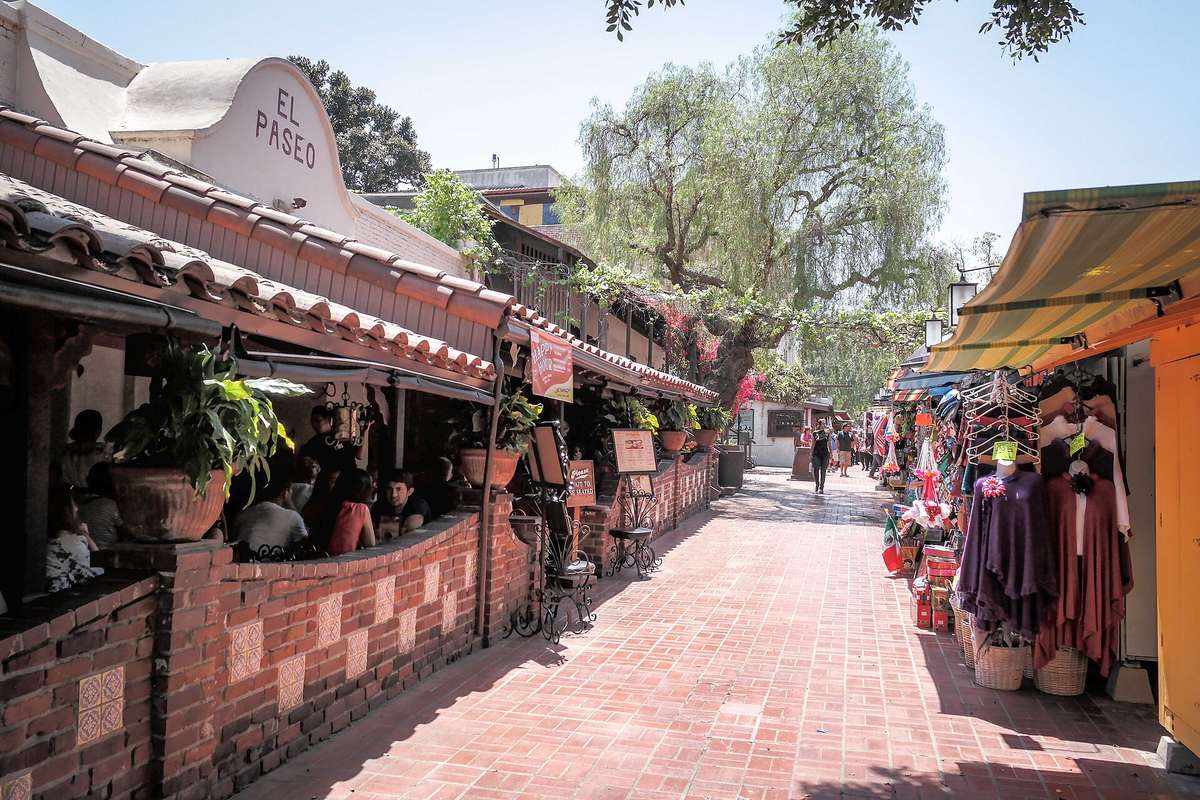
El Pueblo de Los Angeles Historical Monument and Olvera Street are the historic district in downtown Los Angeles where the city was founded in 1781, at 622 N Main St, directly across the street from Union Station. Nearly all of the district's museums are free, and Olvera Street is a Mexican marketplace of shops and restaurants. The Los Angeles city page mentions it briefly; this page covers the buildings, what is open, how to get there and when to go.
History of El Pueblo and Olvera Street
The city says that in September 1781, 44 settlers of Native American, African and European heritage came here from present-day northern Mexico, more than a thousand miles across the desert, and started a farming community. The National Park Service (NPS) adds that they marched the last nine miles from Mission San Gabriel and settled on the site of a Gabrieleno village; the city's tour guides call it Yaanga. By 1800, NPS says, the settlement had 315 residents.
Under Spanish, Mexican and early American rule El Pueblo was the heart of Los Angeles. It was the western end of the Old Spanish Trail and later a stop on the Butterfield Overland Mail route. By the late 1800s the city center had moved away, and the old pueblo became the site of the original Chinatown and Little Italy.
In November 1928 Christine Sterling walked past the Avila Adobe, the oldest house in the city, and saw a notice that it was slated for demolition. She raised money to repair it and pushed for a "Mexican marketplace" next to it. Olvera Street opened on Easter Sunday, 1930, with artisans and craftspeople she had invited.
In 1953 the State of California, the City and the County of Los Angeles created the historic monument together. The Los Angeles Plaza Historic District was listed in the National Register of Historic Places on November 3, 1972, and five more contributing resources were added in 1981. The city puts the district at about 9.5 acres with 22 contributing resources; NPS gives the whole monument as 44 acres. The city says more than 2 million people visit each year.
What to see at El Pueblo
The Old Plaza
NPS calls it California's oldest plaza. It has a gazebo, statues of historical figures and the L.A. Pobladores plaque naming the first settlers, and NPS notes fig trees about 200 years old.
Avila Adobe
Built in 1818 by Francisco José Avila, a rancher from Sinaloa who was alcalde (mayor) of Los Angeles in 1810. From January 10 to 19, 1847, it served as military headquarters for the US forces under Robert Stockton. Condemned in 1926, it is now a museum furnished as it might have looked in the late 1840s, with more than 300,000 visitors a year.
Olvera Street
Shops, restaurants, small museums and galleries line the street. The city calls La Golondrina, in the Pelanconi House, the oldest restaurant on Olvera Street; the house, built in 1855-57, is the oldest fired-brick house still standing in Los Angeles. The official site lists the restaurant as currently closed.
America Tropical mural
In 1932 the Mexican artist David Alfaro Siqueiros was asked to paint an idealized tropical scene on a second-story wall. He painted a crucified Indigenous peasant under an American eagle instead, and within a decade the whole mural was whitewashed. From 1988 the Getty Conservation Institute and the city worked to conserve it and built a shelter and viewing platform. The interpretive center next to it tells the story.
Firehouse, Pico House and the museums
The Plaza Firehouse (1884) was the first building the city built for its fire crews. The Pico House, built by Pío Pico, the last governor of California under Mexican rule, was the city's first three-story building and first grand hotel, opened June 9, 1870; it opens only for events and exhibitions. The Garnier Building (1890), part of the original Chinatown, holds the Chinese American Museum, and the Italian Hall (1907-08) holds the Italian American Museum of Los Angeles. La Placita church, dedicated in December 1822, is the only building at El Pueblo still used for its original purpose.
How to get to El Pueblo
El Pueblo is across the street from Union Station (834 N Alameda St). Metro lists Union Station on the A, B and D Lines and on the J Line (910/950) bus. El Pueblo's site adds Metrolink, Amtrak, the FlyAway bus to LAX and DASH buses. Schedules are on Metro's site.
There are bike racks throughout the park, a 20-dock Metro Bike Share station at 834 N Alameda St and a protected bike lane on Los Angeles Street. El Pueblo runs four public parking lots, and all the revenue goes back into the park.
| Lot | Address |
|---|---|
| Lot 1 | 419 N Main St |
| Lot 2 | 615 N Main St |
| Lot 3 | 852 N Alameda St |
| Lot 4 | 426 N Los Angeles St |
The lots are paid; El Pueblo's getting-here page does not list the rates.
Hours and tickets
Entry to the district is free.
| Place | Hours | Admission |
|---|---|---|
| Olvera Street | every day; each shop and restaurant keeps its own hours (see below) | free |
| Avila Adobe | Tuesday to Sunday, 9 AM to 4 PM | free |
| Plaza Firehouse | Tuesday to Sunday, 10 AM to 3 PM | free |
| Sepulveda House | Tuesday to Sunday, 10 AM to 3 PM | free |
| America Tropical Interpretive Center | Tuesday to Sunday, 10 AM to 3 PM | free |
| Chinese American Museum | Tuesday to Sunday, 10 AM to 3 PM | suggested: $3 adults, $2 seniors 60+ and students with ID |
| Italian American Museum of Los Angeles | Tuesday to Sunday, 10 AM to 3 PM | free, donations encouraged |
| Pico House | special events, exhibitions and filming only |
Hours and prices checked November 5, 2026 on elpueblo.lacity.gov, camla.org and iamla.org.
The official site gives two figures for Olvera Street. The text of its About Us page says the street is open every day, usually from 9 AM to 6 PM, while the listing on the same page says "Open Daily: 9 AM - 8 PM". The home page says hours vary by individual business. The site adds that restaurant and shop hours differ on weekends, during major events and in summer, and that all hours are subject to change. Check the About Us page and the restaurant you have in mind before you go. The Chinese American Museum is also closed on Thanksgiving, Christmas and New Year's Day. The museums are closed on Mondays.
Free tours and tips
The city runs free one-hour tours with certified guides, Thursday to Saturday, starting at 10 AM, 11 AM and 12 PM. Since January 2026 every request must come at least two weeks ahead, and any minor in the group needs a signed waiver or the tour is cancelled. Groups of 70 or more are steered to a self-guided visit. Book through the online form on the tours page; special requests go to eptours@lacity.org. For more sights nearby, see what to see in Los Angeles.
Questions people ask
Is it free to visit Olvera Street and the El Pueblo museums?
Olvera Street is free. El Pueblo's site lists the Avila Adobe, Plaza Firehouse, Sepulveda House and America Tropical Interpretive Center as free, and the Italian American Museum says on its own site that admission is free. The Chinese American Museum asks a suggested $3 for adults and $2 for seniors 60+ and students. Food and shopping on Olvera Street and parking in the El Pueblo lots cost money.
Which day are the El Pueblo museums closed?
Monday. The Avila Adobe is open Tuesday to Sunday from 9 AM to 4 PM, and the Plaza Firehouse, Sepulveda House, America Tropical Interpretive Center and the Chinese American and Italian American museums are open Tuesday to Sunday from 10 AM to 3 PM. Olvera Street itself is open every day, with hours that vary by business.
How do I get to Olvera Street by Metro?
Ride to Union Station, where Metro says the A, B and D Lines and the J Line bus stop. Exit the station and cross N Alameda St: El Pueblo, at 622 N Main St, is directly opposite. Metrolink and Amtrak trains and the FlyAway bus from LAX also arrive at Union Station.
How do I book a free El Pueblo tour?
Tours run Thursday, Friday and Saturday at 10 AM, 11 AM and 12 PM and last about an hour. Requests must come at least two weeks in advance, and later ones are not considered. Book through the online form on the tours page; special requests go to eptours@lacity.org. Every minor in the group needs a signed waiver.
Places on the map
Sources
- El Pueblo de Los Angeles Historical Monument
- About Us, El Pueblo de Los Angeles
- History of El Pueblo, El Pueblo de Los Angeles
- Getting Here, El Pueblo de Los Angeles
- Tours, El Pueblo de Los Angeles
- El Pueblo de Los Angeles Historical Monument, NPS
- Line schedules and maps, LA Metro
- Metro Parking Lots by Line (Union Station on the A, B and D Lines), LA Metro
- J Line 910/950 timetable, effective June 7, 2026, LA Metro
- Visit, Chinese American Museum
- Italian American Museum of Los Angeles